
Dr. Abdulrazzaq Al-Oujaili
Introduction
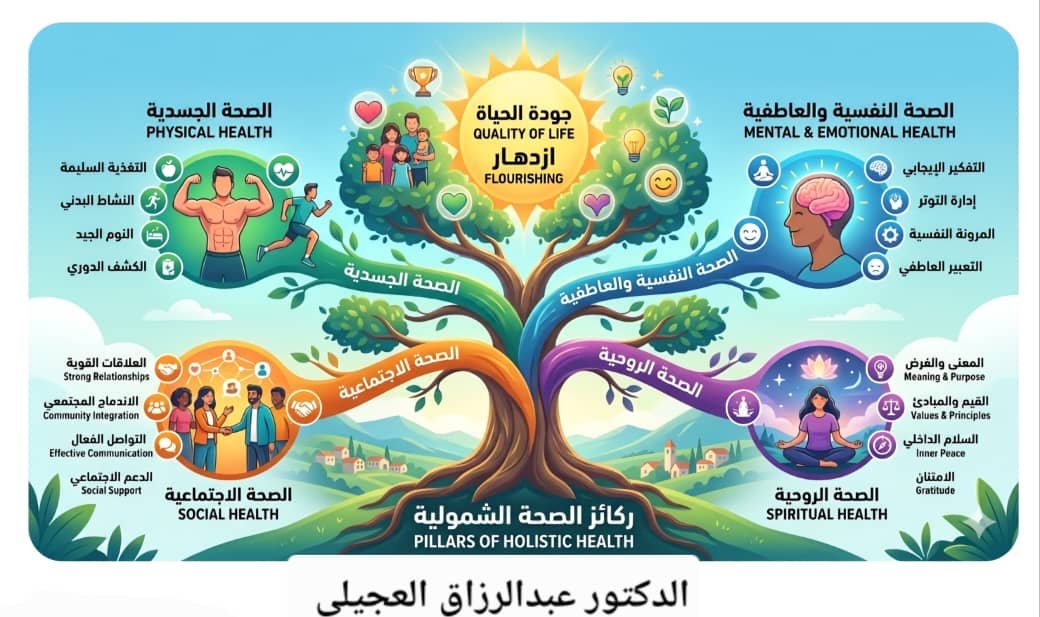
Holistic health is defined as a dynamic, integrated approach that views the human being as an interconnected system encompassing the body, mind, emotions, spirit, and both environmental and social surroundings. Its goal is to achieve maximum balance and elevate quality of life, rather than merely treating symptoms. Studying this concept requires breaking down the various human dimensions to understand how biological and psychological indicators are influenced by individual behaviors and daily interactions.
The Concept of Holistic Health
Modern medical thought has moved beyond the traditional Biomedical Model, which focuses on combating organic disease agents and treating damaged cells. Science has shifted toward a “holistic model” grounded in the World Health Organization’s (WHO) definition, which states that health is a state of complete physical, mental, and social well-being — not merely the absence of disease or disability.
1. The Equation: “Health is a State of Complete Well-being”
This definition sparked an intellectual revolution in medicine, moving humanity from a narrow conception of health (the negative perspective: absence of disease) to a broader, positive one (the holistic perspective: a flow of vitality and well-being).
“Well-being” in this context does not mean financial luxury — it means reaching the highest state of balance and efficiency across three interconnected primary dimensions:
A. Physical Well-being
- Vitality: Having sufficient energy to carry out daily tasks without abnormal fatigue.
- Functional efficiency: The body’s vital systems (heart, lungs, digestion, immunity) operating at peak physiological capacity.
- Structural soundness: Freedom from chronic pain, restorative sleep, and balanced nutrition.
B. Mental & Emotional Well-being
- Awareness of capabilities: The individual recognizes and properly channels their intellectual and emotional potential.
- Psychological resilience: The ability to cope with normal life pressures and recover from trauma.
- Inner peace: The absence of chronic psychological disorders (such as acute anxiety or depression) and the capacity to make balanced decisions.
C. Social Well-being
- Quality of relationships: Having a social support network (family, friends) built on mutual respect and empathy.
- Integration and citizenship: A sense of belonging to one’s community and contributing to it positively and productively.
- Environmental and economic security: Living in a safe environment that provides basic rights (housing, work, education) — since poverty and conflict automatically destroy social well-being.
2. How Does “Well-being” Become a Biological Shield That Protects the Body?
Well-being is not an abstract feeling — it manifests as tangible chemical reactions within the body that directly affect physical health, through the field of Psychoneuroimmunology:
- The impact of psychological well-being: When a person feels contentment and well-being, the brain releases positive neurotransmitters such as dopamine, serotonin, and oxytocin. These hormones lower blood pressure, reduce cellular inflammation, and strengthen the white blood cells responsible for fighting viruses and tumors.
- The danger of absent well-being: Conversely, a person who has no organic illness but lives in misery or social isolation causes their body to chronically secrete stress hormones (cortisol and adrenaline). Over time, this continuous flow destroys arteries, weakens immunity, and leads to the emergence of diabetes and hypertension — proving that the absence of well-being paves the way for physical disease.
3. Practical Applications for Achieving a State of Well-being
Reaching this state requires conscious daily practices that nourish all three dimensions of well-being:
- For physical well-being: Stop poisoning the body with toxins (refined sugar, smoking, chronic sleep deprivation) and commit to 30 minutes of daily movement — whether walking or structured exercise.
- For psychological well-being: Practice mindful thinking, set strict limits on negative news and social media consumption, and dedicate time to hobbies and meditation.
- For social well-being: Invest in genuine relationships (in-person meetings), distance yourself from toxic relationships, and participate in volunteer work that reinforces one’s sense of value within the community.
The Philosophy of Interconnectedness
Holistic health rests on the principle that any imbalance in one dimension of the human being automatically reflects on all other parts. For example, peptic ulcers or chronic headaches cannot be understood in isolation from the psychological pressures and emotional disturbances a person experiences. This makes the study of the pillars of holistic health a fundamental entry point for understanding how to improve quality of life and develop sustainable wellness indicators.
The Eight Core Pillars of Holistic Health
Holistic health encompasses eight foundational pillars that intertwine and complement one another to shape an individual’s overall health:
Pillar One: The Physical Pillar
The material foundation from which all other dimensions emerge. It is not limited to the absence of physiological disease, but encompasses the functional efficiency of bodily organs.
- Physical activity: Regular movement enhances the release of endorphins and dopamine, and improves the efficiency of the circulatory and respiratory systems.
- Sleep and recovery: Sleep is a critical cellular pillar for tissue regeneration, hormone regulation, and memory consolidation.
- Flexibility and endurance: Maintaining muscular and joint fitness protects the body from age-related injuries and supports motor independence.
Pillar Two: The Nutritional Pillar
This dimension relates to the quality of biological fuel entering the body. Holistic nutrition goes beyond counting calories — it focuses on the biological quality of food:
- Whole foods: Reducing processed foods and relying on vegetables, fruits, whole grains, and healthy fats.
- The Gut-Brain Axis: Modern research confirms that the bacterial balance in the gut (the microbiome) directly influences the production of serotonin — the neurotransmitter responsible for mood regulation.
- Hydration: Drinking adequate amounts of water as a critical element in chemical processes and detoxification.
Pillar Three: The Emotional & Psychological Pillar
This pillar relates to the ability to manage emotions and handle the pressures of daily life.
- Emotional self-awareness: The ability to identify and understand emotions (such as anger, sadness, or anxiety) rather than suppressing them.
- Psychological resilience: Recovering swiftly from crises and trauma, and adopting positive coping mechanisms.
- Healthy expression: Communicating effectively with others to share feelings and concerns in constructive ways.
Pillar Four: The Intellectual Pillar
- Continuous learning: Challenging the brain through new skills, reading, or solving complex problems.
- Critical thinking: Evaluating information with awareness and resisting automatic negative thought patterns.
- Creativity: Engaging in activities that open new avenues for intellectual expression and expand one’s horizons.
Pillar Five: The Spiritual Pillar
The search for meaning and purpose in life — a pillar that transcends narrow material concepts.
- Meaning and purpose: Having a greater goal to strive for reinforces the motivation to live and resist depression.
- Connection to the universe and surroundings: A sense of belonging to a larger system, whether through religious practice, meditation, or time in nature.
- Values and principles: Living in harmony with one’s personal ethical framework, which prevents internal conflict.
Pillar Six: The Social Pillar
The human being is social by nature, and the network of relationships plays a deep protective and therapeutic role.
- Supportive relationships: The quality of relationships built on trust, mutual respect, and empathy.
- Sense of belonging: Integration within a community or family that provides psychological and social security.
- Combating isolation: Fighting loneliness, which is scientifically classified as an indirect cause of heart disease and premature death.
Pillar Seven: The Environmental Pillar
The influence of the immediate and broader physical environment on human biology and psychology.
- Exposure to nature: Spending time in green spaces lowers cortisol levels and physiologically improves blood pressure.
- Air quality and surroundings: Living in clean environments free from visual, auditory, and chemical pollution.
- Personal sustainability: Organizing one’s personal space (home, workplace) to minimize visual clutter and promote a sense of calm.
Pillar Eight: The Occupational & Financial Pillar
Material and professional stability provides fertile ground for applying the other pillars of wellness without chronic anxiety.
- Job satisfaction: Practicing work that aligns with one’s passions and abilities, and instills a sense of achievement.
- Work-life balance: Avoiding professional burnout by separating personal life from work-related pressures.
- Financial security: The ability to manage income, meet basic and preventive needs, and avoid falling under the burden of chronic debt.
The Concept of Quality of Life and Its Dimensions
Quality of life is a multidimensional concept that reflects the degree to which individuals are satisfied with and perceive their living standards within the context of their culture and values. Its core indicators can be divided into:
- Subjective Indicators: These include feelings of happiness, life satisfaction, the absence of chronic negative emotions, and the presence of daily passion.
- Objective Indicators: These include material income, educational level, access to healthcare, housing quality, and rates of environmental and social safety.
These indicators converge with the holistic pillars to form an integrated system, in which holistic health serves as the primary driver for raising these indicators and improving an individual’s self-assessment of their own life.
Mechanisms by Which Holistic Health Pillars Influence Quality of Life
1. Reducing Chronic Stress (Allostatic Load)
Sustained stress causes excessive secretion of adrenaline and cortisol, suppressing the immune system and accelerating cellular aging. Holistic practices — meditation, exercise, warm relationships — activate the Parasympathetic Nervous System, returning the body to a state of balance and self-repair.
2. Strengthening Immunity and Preventing Chronic Disease
Commitment to holistic nutrition and regular physical activity reduces Chronic Inflammation in the body — the primary driver of modern diseases such as Type 2 diabetes, cardiovascular disease, and tumors. As a result, healthy years of life free from disability increase.
3. Enhancing Cognitive Performance and Professional Productivity
A sound mind depends on the balance of physical and psychological pillars. Adequate sleep and a diet rich in antioxidants increase blood flow to the brain, raising levels of concentration, decision-making capacity, and innovation in the workplace.
4. Building Social Safety Networks and Community Resilience
Individuals who enjoy holistic health are more capable of giving and building positive relationships. This interconnectedness reduces crime rates and collective psychological disorders, and creates cooperative communities that raise the general well-being of society as a whole.
Practical Strategies for Adopting Holistic Pillars in Daily Life
To translate holistic philosophy into tangible reality that elevates quality of life, a structured daily and weekly action plan can be applied across several levels:
First: Personal-Level Applications
- The 8-8-8 Rule: Consciously dividing the day’s hours (8 hours for deep sleep and rest, 8 hours for work and productivity, 8 hours for personal activities, exercise, relationships, and spiritual practice).
- Mindful Eating: Listening to the body’s natural hunger and satiety signals, chewing slowly, and focusing on real, unprocessed foods.
- Dedicated time for meditation or worship: Practicing silence and present-moment awareness for 15–20 minutes daily to calm racing thoughts and reduce activity in the amygdala (responsible for fear and anxiety).
Second: Environmental & Social Applications
- Digital Detox: Setting strict limits on screen and social media use — especially during the first hour after waking and the last hour before sleep — to protect melatonin levels and sleep quality.
- Scheduling in-person meetings: Replacing virtual communication with real-world gatherings with friends and family to build genuine emotional bonds that increase oxytocin secretion.
Challenges Facing the Application of Holistic Health
Despite the great benefits of holistic care, there are practical obstacles that prevent its widespread adoption in modern societies:
The Fast-Paced Modern Lifestyle
The nature of the contemporary economy and long working hours push individuals toward fast food, prolonged sitting, and neglect of spiritual and social dimensions due to limited available time.
Commercial Dominance of the Pharmaceutical Industry
Global medical systems rely heavily on the economics of short-term pharmaceutical treatment, which reduces investment in holistic awareness programs, preventive medicine, and healthy lifestyle initiatives.
Scarcity of Holistic Culture and Lack of Awareness
A wide segment of the population still associates health exclusively with visiting a hospital, with little genuine understanding of how thoughts, emotions, and the surrounding environment affect the biological state of their bodies.
Future Recommendations
This study demonstrates that holistic health is not merely an optional luxury or a passing modern trend — it is an imperative necessity and the primary driver for sustainably improving quality of life in a world full of pressures and distractions. Achieving wellness does not require miracles; it requires daily, conscious decisions distributed in balance across the pillars of body, mind, spirit, and community.
Proposed recommendations:
- Developing educational curricula: Incorporating holistic wellness, mental health, and nutritional health as core elements in schools and universities, building a health-conscious generation from an early age.
- Restructuring healthcare: Encouraging medical systems to adopt functional and holistic medicine by allocating larger budgets to prevention and lifestyle, rather than solely to delayed pharmaceutical treatment.
- Providing human-friendly work environments: Requiring companies and institutions to adopt Corporate Wellness programs and reduce professional burnout hours to ensure sustainable productivity and a high quality of life for employees.
Conclusion
Adopting the pillars of holistic health represents the foundational cornerstone and most effective path to sustainably raising quality-of-life indicators. The balanced interplay of the pillars of body, mind, and spirit contributes significantly to reducing chronic disease and achieving psychological and social stability for individuals.
Dr. Abdulrazzaq Al-Oujaili


 English
  العربية