
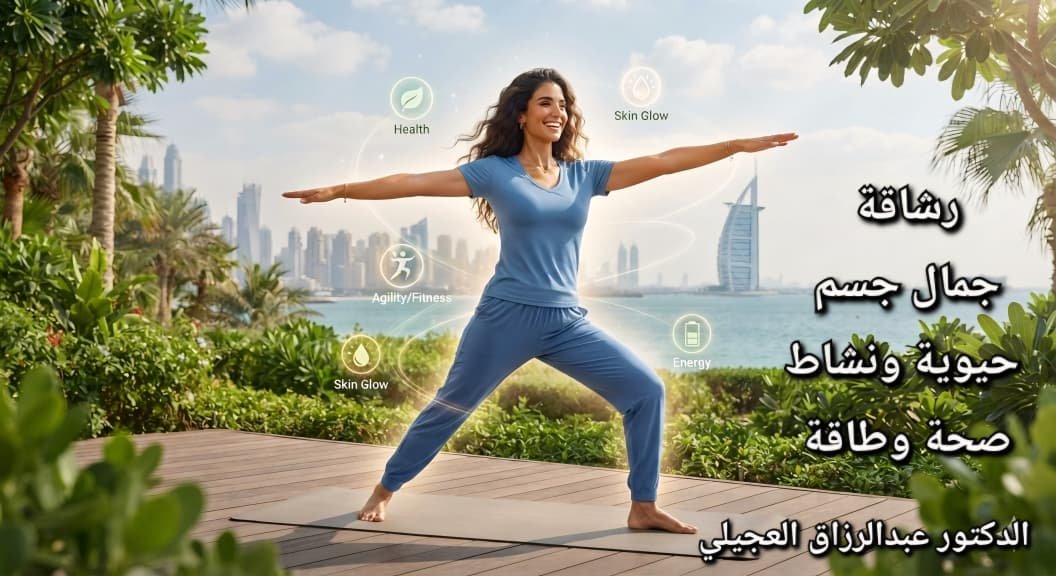
For those seeking fitness and skin beauty while maintaining energy, vitality, and youthfulness
A medical-scientific study / Dr. Abdulrazzaq Al-Oujaili
Abstract & Introduction
Recent decades have witnessed a radical transformation in the medical and biological concepts related to fitness and physical beauty. These two elements are no longer viewed as aesthetic luxuries or mere external appearances tied to height and weight measurements; rather, they are now classified as physiological indicators reflecting the efficiency of internal biological systems, the integrity of gene expression, and metabolic levels. This study introduces the concept of “Bio-Harmony,” a framework in which four fundamental pillars are interconnected: physical agility, structural and external beauty, sustainable health, and the dynamic flow of cellular energy. The study aims to break down the biochemical and physiological mechanisms that make these four elements a single system whose parts cannot be separated—where cellular efficiency and energy production lead to sustainable health, sustainable health is reflected in a fit physique, and this physique manifests as harmonious, disease-free physical beauty.
Chapter One: The Physiological and Mechanical Philosophy of Fitness
- Academic Definition of Agility and Physical Fitness: From a sports and medical perspective, fitness does not merely mean the absence of obesity, but rather the physiological capacity to integrate speed, balance, and neuromuscular coordination in order to change the body’s direction and movement levels with the least possible mechanical effort and resistance. Fitness is directly linked to the quality of connective tissue, the flexibility of tendons and ligaments, and the speed of response of motor units in skeletal muscles.
- The Biomechanical Impact on the Skeletal System: When the body maintains an optimal structural composition (characterized by low fat mass and stable or elevated lean muscle mass), there is a sharp reduction in the vertical and lateral mechanical stresses affecting weight-bearing joints, particularly the knee joint and the lumbar vertebrae.
- Cartilage protection: Reducing excess load prevents the erosion of articular cartilage and leads to lower rates of osteoarthritis.
- Posture: Fitness, supported by strong core muscles, helps maintain the spine’s natural curvature, preventing kyphosis or lordosis, which gives the body a lean, balanced appearance that enhances movement-based and structural beauty.
Chapter Two: Physical Beauty and Hormonal and Cellular Balance
- The Biology of Fat Distribution: Visceral vs. Subcutaneous Fat: Body shape and external harmony are a direct product of the internal hormonal system. Fat storage in the body is divided into two main types:
- Subcutaneous fat: fat located directly beneath the skin that determines external appearance, largely controlled by genetic factors and sex hormones (such as estrogen in women).
- Visceral fat: fat that accumulates around internal organs (such as the liver, pancreas, and heart). Biologically, visceral fat is an active glandular tissue that secretes inflammatory cytokines such as TNF-alpha and IL-6. Elevated levels of these cytokines lead to “systemic low-grade inflammation,” which harms skin freshness and accelerates cellular aging. Therefore, maintaining fitness by reducing visceral fat not only protects the heart and arteries but also prevents the deterioration of external appearance and preserves the vitality of skin tissue.
- The Hormonal Axis and Structural Beauty: Physical beauty and fitness are affected by a complex network of hormones:
- Insulin: A sedentary lifestyle and poor nutrition lead to “insulin resistance,” which drives the body to store fat in the abdominal area (central obesity) and suppresses fat burning, distorting the body’s aesthetic harmony.
- Cortisol: Known as the stress hormone. Chronic elevation leads to the breakdown of muscle proteins (muscle atrophy) and directs fat to accumulate in the face and trunk, in addition to suppressing collagen production, which causes premature wrinkles and sagging skin.
- Growth Hormone (GH) and sex hormones: These hormones work in harmony to stimulate protein synthesis, maintain skin elasticity, and distribute fat in a balanced way that gives a vibrant, youthful appearance.
Chapter Three: Mitochondria and Bioenergetic Transformations
- Mitochondria as the Center of Energy (ATP) Production: At the cellular level, energy and vitality are linked to the efficiency of the mitochondria, the powerhouses within cells that convert nutrients (glucose and fatty acids) into adenosine triphosphate (ATP) molecules through oxidative phosphorylation and the electron transport chain.
When an individual lacks fitness and physical conditioning, the mitochondria become sluggish and functionally impaired (mitochondrial dysfunction), leading to the accumulation of free radicals (Reactive Oxygen Species – ROS) and oxidative stress, which translates biologically into a persistent feeling of fatigue, lethargy, and diminished physical and mental performance.
- Mitochondrial Biogenesis: Studies show that regular physical activity and weight management stimulate a key protein known as PGC-1 alpha. This protein acts as a master regulator, signaling cells to produce new, more efficient mitochondria, particularly in muscle tissue.
- Raising the Basal Metabolic Rate (BMR): An increased number of mitochondria means a greater capacity for the body to burn calories even at rest, making it easier to automatically maintain an ideal weight and fitness level without the need for harsh, continuous diets.
- Abundant daily energy: This cellular improvement is reflected in the individual as a continuous flow of energy, sharp mental activity, and a greater capacity to withstand daily stress, giving the individual’s behavior and appearance a clear vitality.
Chapter Four: Sustainable Health and Resistance to Cellular Aging
- The Biology of Telomeres and Aging: Sustainable health is defined as the body’s ability to resist chronic diseases and maintain its vital functions for as long as possible over an individual’s lifespan. Telomeres—the protective caps at the ends of chromosomes—are the most prominent biological marker of cellular age; they shorten with each cell division until cells reach a stage of senescence and death. Medical research has shown that individuals who maintain fitness and exercise regularly possess longer telomeres compared to their sedentary counterparts. This phenomenon is attributed to the fact that a healthy lifestyle reduces levels of oxidative stress and inflammation, which slows the pace of telomere shortening, granting the body sustained protection against age-related diseases (such as type 2 diabetes, heart disease, and cognitive decline), while also preserving a youthful, vibrant external appearance for tissues and skin.
- Regulation of Glucose Transporters and Blood Sugar Stability: Sustainable health is achieved through stable blood sugar and lipid levels. Muscular fitness plays a crucial role in activating glucose transporter type 4 (GLUT-4). In fit, active bodies, these transporters move to the walls of muscle cells to absorb glucose with high efficiency and minimal insulin, protecting the body from the sharp blood sugar fluctuations that cause sudden hunger, fatigue, and fat storage, thereby supporting a stable, balanced energy flow throughout the day.
Chapter Five: The Golden Triangle of Sustainable Implementation (Execution Mechanisms)
To achieve this bio-harmony in a practical and sustainable way, three main pillars must be integrated into daily lifestyle:
- Flexible Functional Nutrition: Harsh diets that lead to muscle mass loss and slowed metabolism must be avoided. Nutrition that supports fitness and beauty is achieved through:
- Adequate high-quality protein: to ensure the preservation of muscle mass and muscle tone, and to provide the amino acids necessary for building collagen and elastin in the skin.
- Essential fatty acids (Omega-3): support the flexibility of cell membranes, reduce systemic inflammation, and maintain skin moisture and freshness from within.
- Antioxidants and micronutrients: such as vitamins C, E, and A, along with zinc and selenium, which act as protective shields for mitochondria and skin cells against free radicals.
- Exercise Engineering: To achieve fitness and energy flow, a hybrid movement program combining two types of training should be adopted:
- Resistance training: whether using weights or bodyweight, targeting the preservation of muscle tissue, stimulating bone density, and giving the body the toned, harmonious appearance that prevents sagging.
- Aerobic exercise and High-Intensity Interval Training (HIIT): which directly raise the efficiency of the cardiorespiratory system (VO2 max), stimulate mitochondrial biogenesis, and accelerate visceral fat burning.
- The System of Cellular Repair and Neurological Sleep: The biological system cannot be complete without adequate recovery periods. Deep, regular sleep (7 to 8 hours per night) is the fundamental platform for resetting the body:
- Growth Hormone (GH) secretion: The secretion of this hormone peaks during deep sleep stages (Non-REM Stage 3), which is primarily responsible for repairing damaged tissue, regenerating skin cells, and building muscle.
- Brain and cellular cleansing: The glymphatic system works during sleep to clear the brain of toxic protein waste, recharging mental and physical energy levels for the following day.
Chapter Six: The Interconnected Matrix
The state of “bio-harmony” is achieved when the efficiency of each of the four elements dynamically and directly influences, and is influenced by, the remaining three elements, which we break down scientifically in the following interconnected points:
- Effects Emanating from Fitness (Agility & Fitness):
- Effect of fitness on physical beauty: The harmonious muscle tone resulting from fitness contributes to tightening the skin and preventing sagging caused by aging or sudden weight loss. Strengthening the core muscles also ensures an upright posture and smooth movement, giving the body a lean and attractive appearance.
- Effect of fitness on sustainable health: Reducing excess fat mass and maintaining an ideal weight lightens the vertical mechanical loads on joints and cartilage. This reduces the chances of early joint degeneration, protects blood vessels from hardening, and preserves arterial flexibility over the long term.
- Effect of fitness on bioenergetics: Active muscle tissue functions as a powerful metabolic organ; increased movement efficiency raises the body’s capacity to consume oxygen and deliver nutrients to cells effectively, boosting daily physical activity levels without quickly feeling fatigued.
- Effects Emanating from Physical Aesthetics:
- Effect of physical beauty on fitness: External harmony and a balanced structural fat distribution (reduced waist circumference) mean the absence of movement obstacles, giving the body greater flexibility and lightness in movement and more efficient exercise performance with better neuromuscular coordination.
- Effect of physical beauty on sustainable health: Structural beauty (such as the absence of fat accumulation in the abdominal area) is directly linked to lower levels of dangerous visceral fat. This reduction protects the body from “chronic low-grade inflammation,” the primary cause of type 2 diabetes and coronary heart disease.
- Effect of physical beauty on bioenergetics: Skin freshness and a vibrant external appearance are biomarkers of the absence of internal cellular stress and efficient peripheral blood circulation, reflecting an abundance of bioenergetic vitality and the effective delivery of oxygen and nutrients to all the body’s cells and tissues.
- Effects Emanating from Sustainable Health:
- Effect of sustainable health on fitness: Sustainable health ensures the integrity of the central and peripheral nervous system responsible for sending motor signals to the muscles, improving response speed, balance, and the ability to continue developing physical fitness levels without exposure to debilitating injuries.
- Effect of sustainable health on physical beauty: Internal hormonal balance (a cornerstone of sustainable health) maintains the stability of insulin and cortisol levels. This balance prevents sudden central obesity and protects collagen proteins in the skin from breaking down, preserving a taut, youthful skin appearance.
- Effect of sustainable health on bioenergetics: Stable blood sugar and blood pressure levels, along with the absence of metabolic disorders, help prevent sudden energy crashes, ensuring a balanced and steady energy flow for the individual throughout the entire day.
- Effects Emanating from Bioenergetics (Bioenergetics & ATP):
- Effect of bioenergetics on fitness: Cellular energy molecules (ATP) produced by active mitochondria provide the “biological fuel” necessary for muscle contraction and regular, high-intensity exercise performance, allowing the individual to continuously improve their fitness and agility without chronic exhaustion.
- Effect of bioenergetics on physical beauty: An abundance of bioenergetic vitality enables tissues and skin to carry out the necessary cell divisions and rapidly repair damaged cells. This ongoing cellular renewal helps maintain skin freshness, hair health, and delays the appearance of signs of aging.
- Effect of bioenergetics on sustainable health: Highly efficient mitochondria protect cells from the accumulation of harmful free radicals (ROS). This reduces the occurrence of “oxidative stress,” which damages DNA and shortens telomeres, granting the cells of vital organs a longer biological lifespan and greater resistance to chronic diseases.
Conclusion & Recommendations
This study demonstrates that fitness, physical beauty, sustainable health, and energy are not isolated islands but rather different manifestations of a single biological state: “high cellular and metabolic efficiency.” Any intervention aimed at improving one of these elements will necessarily have a positive effect on the other three. Based on the scientific evidence presented, the study recommends the following:
- Focus on body composition rather than total weight: The goal should be to reduce fat mass (especially visceral fat) while maintaining or increasing lean muscle mass.
- Invest in mitochondrial health: Through diverse physical activities and by avoiding excessive consumption of refined sugars, which cause oxidative stress to energy-producing cells.
- Consider sleep and recovery as part of the health program: Deep sleep is no less important than exercise and nutrition; it is the time during which the body secretes the hormones responsible for cellular and aesthetic building and repair.
- Adopt a sustainable preventive approach: By maintaining an active lifestyle that prevents the shortening of genetic telomeres and protects the body from chronic low-grade inflammation.
Ultimately, the pursuit of fitness and beauty through a scientific medical lens is a long-term investment in quality of life, where bioenergetic vitality flows abundantly to create a body that is healthy, fit, and naturally and sustainably beautiful.
Dr. Abdulrazzaq Al-Oujaili


 English
  العربية