By Dr Abdulrazzaq Hashim Aloujaili
Introduction: An Entry into the World of Blue-Green Algae
Spirulina is one of the oldest living organisms on Earth. It is a microscopic, filamentous, multicellular microalga that biologically belongs to the family of cyanobacteria (blue-green algae). These algae grow naturally in tropical and subtropical lakes characterized by highly alkaline, warm, and mineral-rich waters, particularly in regions such as Chad, Mexico, and East Africa.
Over the past few decades, spirulina has transitioned from a wild alga consumed by ancient civilizations—such as the Aztecs in Central America and the Kanembu people around Lake Chad—to being globally classified as an elite “superfood.”
The World Health Organization (WHO) has declared spirulina as one of the most promising foods on Earth to combat malnutrition. Furthermore, the National Aeronautics and Space Administration (NASA) and the European Space Agency (ESA) have adopted it as a core component of astronaut diets during long-term space missions. This choice is driven by its exceptional nutrient density and the feasibility of cultivating it within confined spaces.
1. Biological Classification and General Characteristics
A. Scientific Identity and Taxonomy
Commercially and scientifically, spirulina primarily encompasses two main species:
- Arthrospira platensis
- Arthrospira maxima
These organisms are characterized by their microscopic helical or spiral structure (from which the name “Spirulina” is derived). They rely on photosynthesis for survival, converting sunlight into chemical energy with an efficiency rate that surpasses that of traditional terrestrial plants.
B. Ideal Growth Conditions and Environment
- Alkalinity (pH Level): It thrives in a pH range between 9 and 11. This highly alkaline environment naturally inhibits the growth of most other competing pathogenic microorganisms.
- Temperature: It prefers warm climates, with optimum growth occurring between 35°C and 40°C.
- Light: High light intensity is crucial to drive photosynthesis and stimulate the production of bioactive pigments.
2. Detailed Nutritional Profile (The Ultimate Composition)
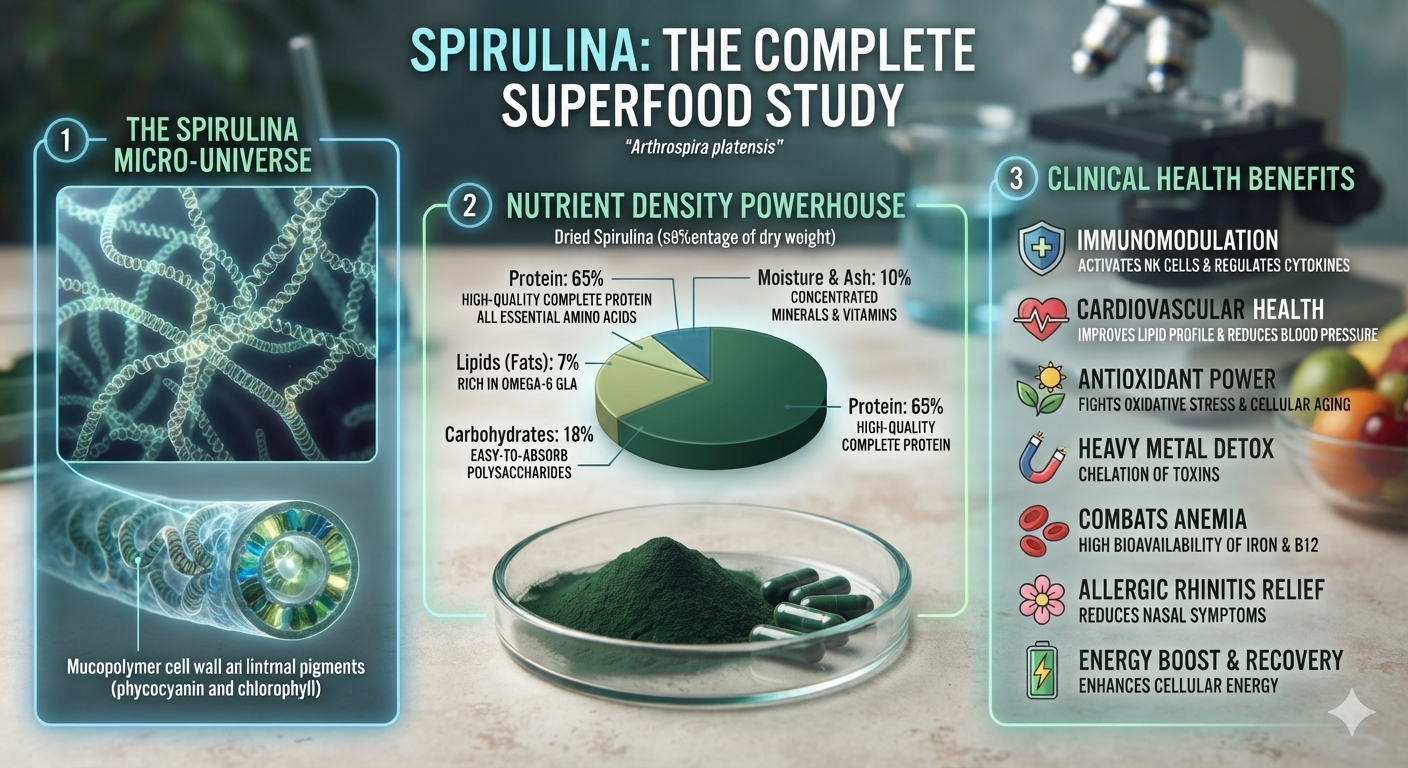
Spirulina boasts a unique nutritional density. A few grams of this microalga can equal kilograms of traditional vegetables and fruits in terms of micronutrient concentration.
+-----------------------------------------------------------------------+

|                    Macronutrient Composition of Spirulina             |
|                                                                       |
|  [ Proteins: 60% - 70% ]     ===> Contains all essential amino acids  |
|  [ Carbohydrates: 15% - 20% ] ===> Easy-to-absorb complex sugars      |
|  [ Lipids/Fats: 5% - 7% ]     ===> Rich in GLA (Omega-6)               |
|  [ Moisture & Ash: 5% - 8% ]  ===> Concentrated minerals & vitamins    |
+-----------------------------------------------------------------------+
A. Proteins and Amino Acid Profile
The protein content of dry spirulina ranges between 60% and 70% of its total weight. This percentage far exceeds that of red meat (approx. 20–25%) and soybeans (approx. 35%).
- Complete Protein: Spirulina contains all eight essential amino acids that the human body cannot synthesize on its own, alongside a balanced profile of non-essential amino acids.
- High Digestibility: Unlike land plants, spirulina does not possess a rigid cellulose cell wall. Instead, its cell membrane is composed of a highly soluble mucopolymer material. This allows the human body to digest and absorb its protein at an efficiency rate exceeding 85%.
B. Lipid Profile and Essential Fatty Acids
Despite its low overall fat content (around 5–7%), the lipids present are of exceptional biological value:
- Gamma-Linolenic Acid (GLA): Spirulina is one of the richest natural sources of this essential Omega-6 fatty acid. GLA acts as a direct precursor for the synthesis of anti-inflammatory prostaglandins in the body. Its concentration in spirulina is surpassed only by human breast milk and a few rare botanical oils, such as evening primrose oil.
- Other Fatty Acids: It also contains linoleic acid, oleic acid, and palmitic acid.
C. Carbohydrates and Glycemic Impact
Carbohydrates make up about 15–20% of its dry weight. They exist mainly in the form of rhamnose and glycogen—complex polysaccharides that cells can easily break down for immediate energy without triggering sharp spikes in blood glucose levels.
D. Comprehensive Micronutrient Profile (Vitamins & Minerals)
| Vitamins | Minerals | Phytochemical Pigments |
|---|---|---|
| B-Complex Vitamins: (B1, B2, B3, B6, B9) Essential for neurological health and cellular energy production. | Iron: Present in a highly bioavailable organic form that does not cause constipation, unlike chemical iron supplements. | Phycocyanin: The distinct blue pigment unique to spirulina, acting as a potent antioxidant and anti-inflammatory agent. |
| Vitamin A (Beta-Carotene): Concentrated at levels 10 times higher than carrots, making it vital for vision and immune integrity. | Calcium & Magnesium: Synergistically supports bone density, muscle relaxation, and enzymatic functions. | Chlorophyll: The green pigment known for blood-purifying properties and enhancing cellular oxygenation. |
| Vitamins E & K: Potent fat-soluble antioxidants and crucial cofactors for blood coagulation pathways. | Zinc, Selenium, & Potassium: Trace elements essential for mounting an effective immune response and cellular defense. |
3 . Immunomodulatory Role of Spirulina (Biochemical Mechanisms)
The capacity to enhance and regulate the immune system is the most heavily documented and academically studied medical attribute of spirulina. Spirulina does not function as a random immune stimulant; rather, it acts as an immunomodulator. This means it balances the immune response—activating it when dormant and suppressing it during chronic inflammation or hypersensitivity.
              ┌────────────────────────────────────────┐
              │     Immune Support Mechanisms of       │
              │              Spirulina                 │
              └───────────────────┬────────────────────┘
                                  │
         ┌────────────────────────┼────────────────────────┐
         ▼                        ▼                        ▼
┌─────────────────┐      ┌─────────────────┐      ┌─────────────────┐
│ Activation of   │      │ Stimulation of  │      │ Suppression of  │
│ Natural Killer  │      │ Antibody        │      │ Inflammatory    │
│ (NK) Cells      │      │ Production (IgA)│      │ Cytokines       │
└─────────────────┘      └─────────────────┘      └─────────────────┘
A. Activation of Natural Killer (NK) Cells
Natural Killer cells serve as the body’s primary line of defense against virally infected cells and malignant tumor formations. Clinical trials have demonstrated that regular spirulina consumption significantly boosts the cytotoxicity and killing efficiency of NK cells by upregulating the release of cytolytic granules like perforin and granzymes.
B. Stimulation of Antibody Production
Spirulina actively stimulates both B-lymphocytes and T-lymphocytes. Research indicates that spirulina extracts elevate the levels of Immunoglobulin A (IgA). Since IgA is predominantly found in mucosal linings (such as the respiratory and gastrointestinal tracts), this increase effectively prevents pathogens from breaching the body’s primary biological barriers.
C. Regulation of Cytokine Networks
During severe infections, the body can experience a “cytokine storm”—a runaway hyper-inflammatory response that inflicts severe tissue damage. Spirulina regulates this network by boosting anti-inflammatory cytokines, such as Interleukin-10 (IL-10), while simultaneously downregulating pro-inflammatory cytokines, including TNF-alpha and Interleukin-6 (IL-6).
D. Impact of Phycocyanin on Bone Marrow Function
Phycocyanin is a unique pigment-protein complex found in spirulina. In vitro and in vivo studies suggest that phycocyanin mimics the activity of erythropoietin (EPO), a hormone that stimulates hematopoietic stem cells within the bone marrow. This process accelerates the production of both new white blood cells (fueling the immune response) and red blood cells (preventing anemia).
4. Antioxidant Properties and Mitigation of Cellular Aging
Every day, human cells are subjected to oxidative stress caused by free radicals—unstable molecules generated by pollution, processed foods, radiation, and metabolic stress.
A. Scavenging Free Radicals
Spirulina contains an intricate network of endogenous antioxidant enzymes, most notably Superoxide Dismutase (SOD) and catalase, working alongside Vitamin E and carotenoids. These compounds neutralize reactive oxygen species (ROS) before they can attack cellular DNA, thereby preventing genetic mutations that can lead to oncogenesis (cancer development).
B. Inhibition of Lipid Peroxidation
Human cell membranes are comprised of a delicate lipid bilayer. When free radicals oxidize these lipids, the structural integrity of the cell collapses, leading to premature cell death. The active lipophilic compounds in spirulina shield these membranes from lipid peroxidation, preserving cellular youthfulness, tissue elasticity, and muscular function while delaying systemic aging.
5. Evidence-Based Clinical and Therapeutic Benefits
Beyond its immunomodulatory properties, the physiological impact of spirulina spans multiple vital organ systems:
A. Cardiovascular Health and Lipid Regulation
Spirulina clinically optimizes blood lipid profiles via several distinct pathways:
- Reduces Low-Density Lipoprotein (LDL) Cholesterol and circulating triglycerides.
- Elevates High-Density Lipoprotein (HDL) Cholesterol, which clears arterial plaque.
- Upregulates Nitric Oxide (NO) Synthesis: This relaxes vascular smooth muscle, expanding blood vessels and naturally lowering hypertensive blood pressure.
B. Management of Blood Glucose Levels
Clinical trials involving Type 2 diabetes patients revealed that a daily intake of just 2 grams of spirulina significantly lowered fasting blood glucose levels. More importantly, it led to a noticeable reduction in Glycated Hemoglobin (HbA1c) percentages, indicating an overall improvement in systemic insulin sensitivity.
C. Remediation of Anemia and Hemoglobin Elevation
Due to its profound concentration of bioavailable organic iron, Vitamin B12, and folic acid, spirulina acts as an excellent natural intervention for anemia. Clinical evidence highlights its efficacy in expanding hemoglobin levels among the elderly, pregnant women (under medical guidance), and children suffering from nutritional deficits.
D. Heavy Metal Detoxification (Chelation)
Spirulina possesses a remarkable capacity for biochemical chelation. Its molecular structure allows it to bind tightly to toxic heavy metals accumulated within tissues—such as arsenic, lead, cadmium, and mercury—facilitating their safe filtration and excretion through the kidneys and liver. This quality makes it highly beneficial for populations residing in industrial zones or areas with contaminated groundwater.
E. Attenuation of Allergic Rhinitis
Millions of individuals suffer from seasonal allergies triggered by pollen, dust, or animal dander. Clinical research shows that spirulina effectively blocks the release of histamine from mast cells. Patients taking spirulina report a dramatic reduction in clinical symptoms, including rhinorrhea (runny nose), sneezing, nasal congestion, and ocular itching, outperforming placebo groups.
6. Molecular Mechanisms and In Vitro Pathways
To understand the therapeutic efficacy of spirulina at a cellular level, we must examine its impact on specific biochemical signaling pathways:
A. The NF-kB Pathway and Inflammatory Cascade
Nuclear Factor Kappa B (NF-kB) is the primary genetic switch responsible for initiating the inflammatory cascade within human cells. The phenolic compounds and phycocyanin within spirulina act as targeted inhibitors of NF-kB activation. By shutting down this switch, cells are prevented from manufacturing inflammatory enzymes such as COX-2 (Cyclooxygenase-2). This mirrors the mechanism of non-steroidal anti-inflammatory drugs (NSAIDs) like ibuprofen, but without inducing gastric mucosal erosion.
B. Activation of the Nrf2 Signaling Pathway
The Nrf2 pathway is the master regulator of the body’s internal cytoprotective and antioxidant defenses. Spirulina triggers the nuclear translocation of Nrf2, forcing the body to ramp up its own production of endogenous antioxidants, most notably Glutathione. Glutathione is the premier antioxidant synthesized by the liver, essential for cellular detoxification and tissue protection.
7. Industrial, Commercial, and Environmental Applications
The global significance of spirulina extends far beyond human clinical nutrition into sustainable industrial and ecological domains:
A. Sustainable Aquaculture and Global Food Security
The cultivation of spirulina displays an environmental efficiency that outclasses almost all traditional terrestrial agricultural crops:
- Water Conservation: It requires a fraction of the water footprint needed to produce an equivalent kilogram of protein compared to beef, poultry, or soy.
- Land Utilization: Spirulina does not require arable soil. It can be cultivated on arid, non-arable lands using open-channel raceway ponds or closed photobioreactors.
- Carbon Sequestration: It acts as a massive carbon sink, absorbing exceptional volumes of atmospheric carbon dioxide (CO₂) and releasing pure oxygen (O₂), making its production ecologically net-negative regarding carbon footprints.
B. Food Technology and Natural Colorants
Driven by consumer demand away from synthetic dyes, the food industry extensively utilizes phycocyanin extracted from spirulina as a stable, non-toxic, natural blue food colorant. It replaces synthetic pigments (like Blue No. 1) in confectionery, beverages, and dairy products, which have been historically linked to hyperactivity and attention deficits in children.
C. Cosmeceuticals and Dermatological Formulations
Cosmetic manufacturers integrate spirulina extracts into anti-aging topical creams, serums, and facial masks. The ingredient helps retain skin moisture, promotes dermal collagen synthesis, and suppresses hyperpigmentation brought on by ultraviolet (UV) radiation.
8. Recommended Dosages and Safe Administration
Spirulina is commercially distributed in three primary delivery formats: fine powder, compressed tablets, or encapsulated powders.
A. Standard Dosage Guidelines
- General Wellness and Preventative Maintenance: 1 to 3 grams daily.
- Therapeutic Targets (Lipids, Glycemia, Allergies): 4 to 8 grams daily (ideally split into two or three smaller doses).
- Athletic Performance and Accelerated Muscle Recovery: Up to 10 grams daily, compensating for the high metabolic turnover and oxidative stress of intense training.
B. Administration Guidelines
- Powder Forms: It can be seamlessly blended into fresh fruit juices (citrus profiles like pineapple, mango, or lemon work best to mask the distinct earthy, marine flavor) or stirred into organic yogurts.
- Gradual Titration: It is highly recommended to begin at half the target dose for the first week. This allows the digestive system to comfortably acclimate to the rapid systemic detoxification process.
9. Future Horizons and Emerging Frontiers in Research
Modern clinical research is currently exploring revolutionary medical applications for spirulina:
A. Genetic Engineering for Oral Vaccine Delivery
Biotechnologists are investigating the genetic modification of spirulina strains to synthesize specific antigenic proteins. This could allow spirulina to serve as an edible oral vaccine against infectious diseases, bypassing the complex cold-chain storage infrastructure currently limiting vaccine distribution in developing nations.
B. Targeted Oncology Protocols
Advanced clinical trials are evaluating the efficacy of liposomal phycocyanin delivery systems in oncology. Current data shows that these formulations can specifically target malignant cell lines—such as breast and colorectal carcinomas—inducing apoptosis (programmed cell death) within tumor tissues while leaving surrounding healthy cells entirely unharmed.
Scientific Conclusion
Through rigorous in vitro, in vivo, and double-blind clinical trials, spirulina continues to prove that it is far more than a passing trend in the supplement industry. It represents a highly sophisticated, evolutionary food matrix engineered by nature. Its combination of complete proteins, rare essential fatty acids, comprehensive vitamins, and unique therapeutic pigments like phycocyanin delivers an unparalleled tool for modern medicine. It offers a definitive means to fortify the human immune system against chronic pathologies, viral vectors, and the oxidative stresses of contemporary life.
Provided that consumers prioritize pristine, third-party verified organic sourcing and adhere to established clinical dosage parameters, spirulina represents a foundational, long-term investment in human preventative health, while offering a scalable pillar for global nutritional sustainability.
An Invitation to Invest in Your Future Health
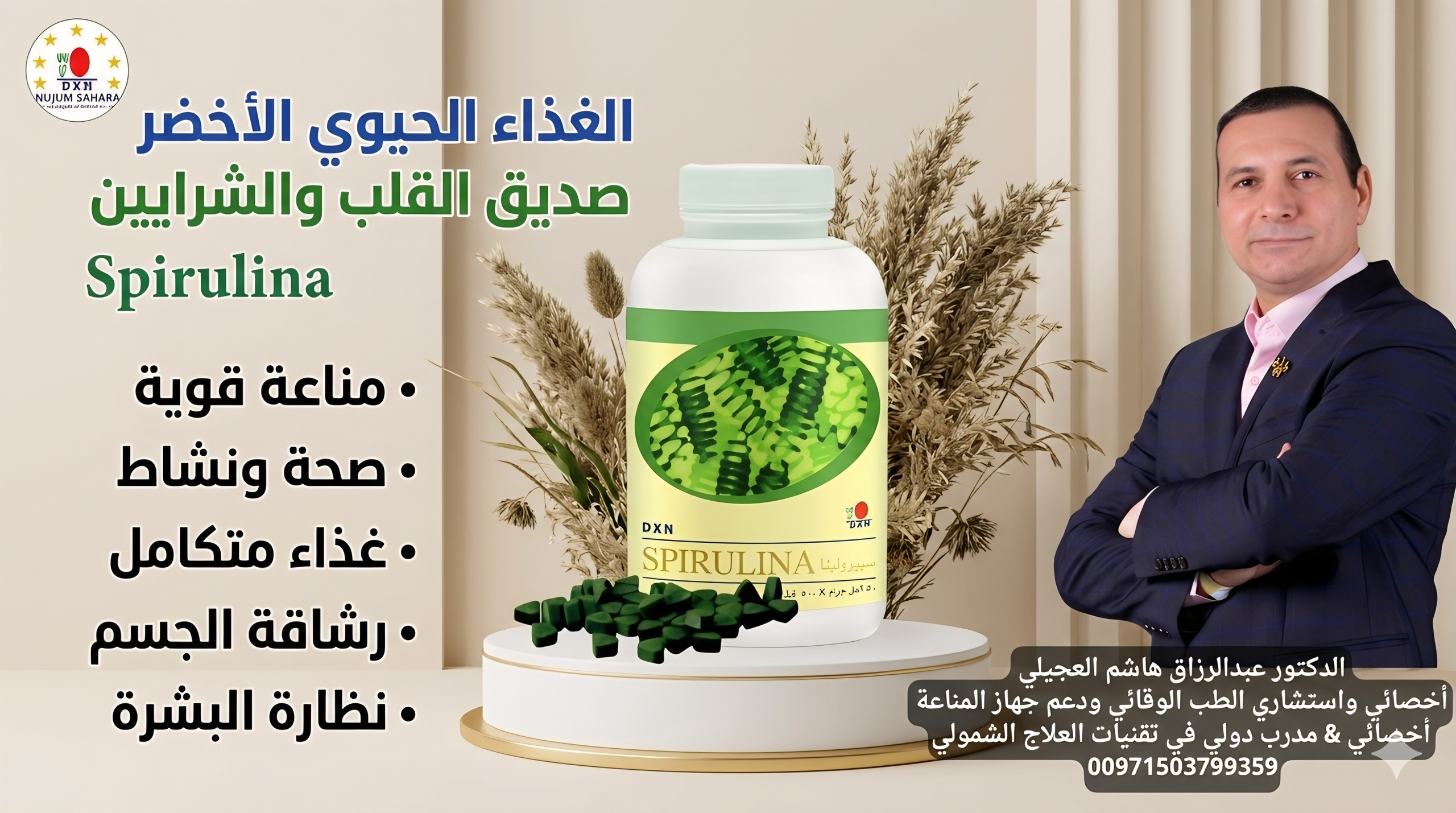
At the conclusion of this scientific journey, it becomes abundantly clear that spirulina is not merely a passing dietary supplement, but rather a gift from nature that encapsulates the secret of life and vitality within its blue-green cells. It stands as your biological shield against contemporary pollutants and the stresses of daily life, serving as the pure fuel that grants your cells renewed energy and an unyielding immune system.Do not wait for health ailments to knock on your door to begin caring for your body; prevention is always the smartest and most enduring investment. One simple step today—whether by adding a spoonful of this superfood powder to your morning smoothie or taking its tablets regularly—is enough to unlock the gates of vitality and energy, granting you, by God’s grace, a long and healthy life.Make spirulina a companion in your daily routine, and share this knowledge with your family and loved ones, for a strong society begins with individuals who possess genuine health awareness. Take action now, choose a trusted organic source, and discover for yourself how a microscopic food can make a monumental difference in the quality of your life!
Dr.Abdulrazzaq Aloujaili


 English
  العربية