By Dr. Abdulrazzaq Hashim Aloujaili
Introduction
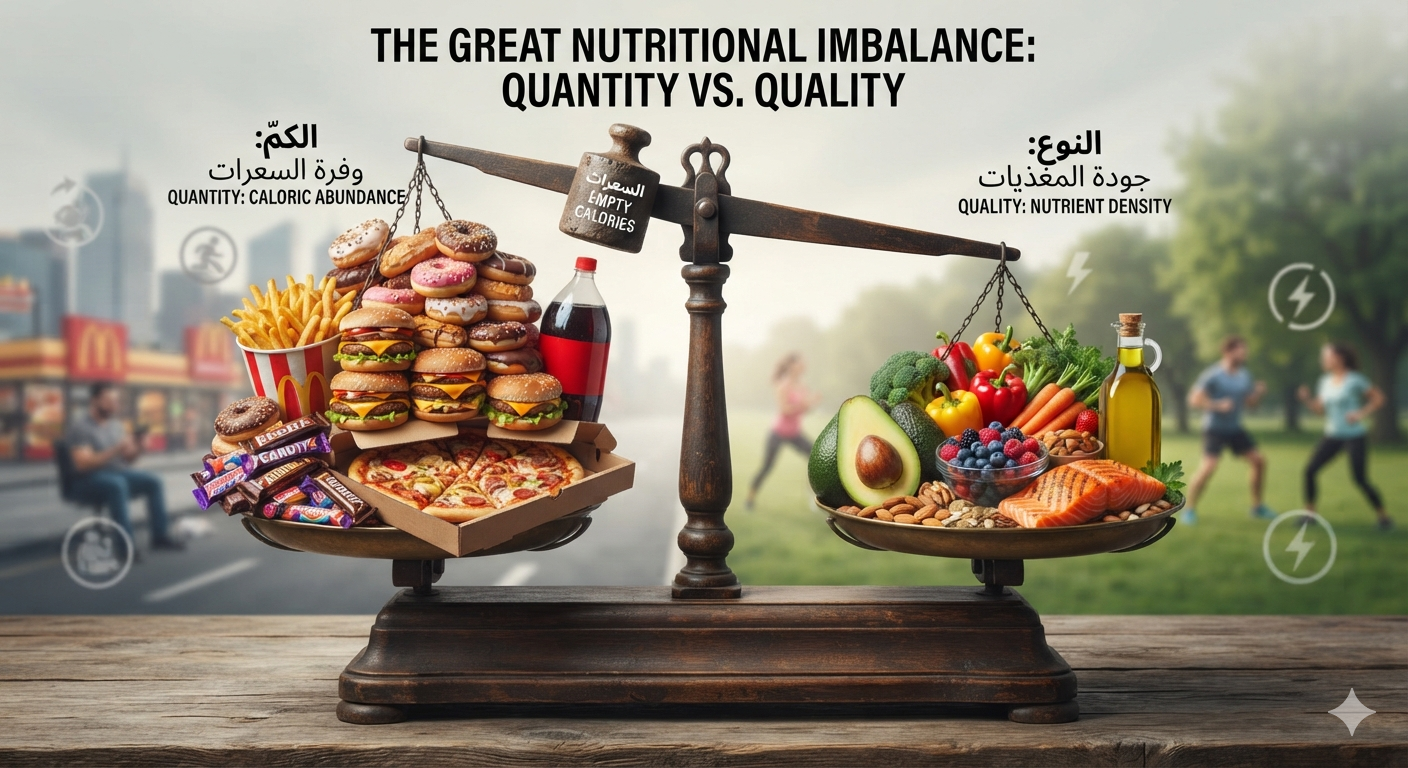
Recent decades have witnessed unprecedented, radical shifts in human consumption and dietary patterns, heavily influenced by the industrial revolution, economic globalization, and the accelerating pace of urban life. Amidst these transformations, the global food challenge has shifted from merely securing the minimum caloric intake necessary for survival and famine prevention, into a complex structural crisis centered around the balance between the “quantity” of food consumed and its “quality” and biological value.
The excessive reliance on processed food products has given rise to a strange health paradox: skyrocketing rates of obesity and overweight coexisting with a widespread prevalence of “hidden hunger,” where the body receives a massive amount of empty energy completely devoid of true nutritional value. This study aims to deconstruct this issue by analyzing the physiological, biochemical, socio-economic dimensions of the impact of dietary inputs on human health, while reviewing the mechanisms through which food quality and quantity influence metabolic balance, the prevention of chronic diseases, and overall quality of life.
Chapter One: Deconstructing Concepts (Quantity vs. Quality in the Context of Modern Nutrition)
First: Food Quantity (Calories and Bioenergy)
Food quantity refers to the total energy consumed in units of calories, along with the portion sizes eaten in a single meal. Throughout human evolutionary history, obtaining a sufficient amount of calories was an arduous process that required physical effort. Consequently, the human body developed biological mechanisms to conserve and store energy in anticipation of periods of scarcity.
However, modern abundance has disrupted this equation. Today, calories have become cheap, permanently available, and energy-dense. Consuming amounts that exceed the body’s Basal Metabolic Rate (BMR) and habitual physical activity inevitably leads to the accumulation of visceral and subcutaneous fat. This accumulation does not just stop at changing the body’s appearance; it transforms into an active secretory organ that releases inflammatory cytokines, altering the body’s internal environment.
Second: Food Quality (Chemical Quality, Macronutrients, and Micronutrients)
In contrast, food quality refers to the chemical and biological composition of the food item. Is it rich in macronutrients (high-quality proteins, healthy fats, complex carbohydrates with fiber) and micronutrients (vitamins, minerals, and antioxidants)? Or is it nutrient-poor and stripped of its original structure, such as refined sugars and hydrogenated oils?
Food quality is the compass that guides cellular gene expression. Food is not merely mechanical fuel burned to generate heat; rather, it is an informational code that interacts with DNA (Epigenetics). Consuming foods rich in micronutrients stimulates cell repair pathways, supports immunity, and regulates enzymatic processes. Conversely, poor-quality food disrupts these pathways and impairs delicate vital functions.
Chapter Two: Dietary Transition and the Modern Environment
The Impact of Intensive Food Processing
The twentieth century witnessed a revolution in food preservation and manufacturing technologies, which initially aimed to extend the shelf life of food products and reduce their logistical costs. However, this trend deviated toward the manufacturing of what is known today as “Ultra-Processed Foods.” These foods undergo a complex series of industrial processes (such as extraction, texturizing, molding, and the addition of artificial flavors, emulsifiers, and texture enhancers).
During these processes, food materials lose most of their natural fibers, vitamins, and antioxidants. Concurrently, massive amounts of high-fructose corn syrup (HFCS), sodium, and refined vegetable oils rich in omega-6 fatty acids are added. The latter increases the severity of inflammation in the body when its ratio to omega-3 fatty acids becomes imbalanced.
The Phenomenon of Hidden Hunger
Hidden hunger is defined as a deficiency in micronutrients (such as iron, zinc, vitamin D, and vitamin B complex) despite a person obtaining their full requirement of calories, and potentially even suffering from overweight or obesity. This type of hunger is more dangerous because it is silent; it does not manifest as immediate general weakness, but rather seeps into metabolic and hormonal processes. Consequently, it leads to a gradual decline in the efficiency of the immune system, reduced cognitive abilities, and a chronic sense of fatigue and muscle weakness.
Chapter Three: The Physiological and Biological Impact of the Imbalance
Insulin Resistance and Metabolic Syndrome
Continuous reliance on low-quality foods and excessive amounts of fast-acting carbohydrates and added sugars places immense pressure on the pancreas to secrete large amounts of the hormone insulin. Over time, cell receptors become overwhelmed and depleted by this constant flood of insulin, leading to the onset of “insulin resistance.”
Insulin resistance is the cornerstone of what is known as Metabolic Syndrome, which comprises a cluster of interconnected symptoms: high blood pressure, elevated triglycerides, low high-density lipoprotein (HDL) cholesterol, and abdominal fat accumulation. This syndrome paves a direct path toward type 2 diabetes and cardiovascular diseases.
Low-Grade Chronic Inflammation
Ultra-processed foods and trans fats interact negatively with the immune system in adipose tissues and the digestive tract, triggering immune cells to continuously release inflammatory signals. Unlike acute inflammation—which is a temporary and beneficial defensive response—low-grade chronic inflammation acts as a slow, silent fire that damages the lining of blood vessels, accelerates cellular aging, and is closely linked to numerous degenerative and cancerous diseases.
Disruption of the Gut Microbiome
Beneficial gut bacteria rely primarily on fermentable dietary fibers found in vegetables, fruits, and whole grains to feed and produce short-chain fatty acids (such as butyrate) that protect the intestinal wall and regulate immunity. When refined quantities overshadow fiber intake, these beneficial bacteria decline, while harmful bacteria that feed on simple sugars and artificial emulsifiers thrive. This leads to “leaky gut” syndrome, allowing toxins and inflammation to pass into the general bloodstream.
Chapter Four: Corporate Psychology and Food Economics
The Bliss Point
Major food corporations invest massive amounts of money in behavioral neuroscience to determine what is known as the “Bliss Point.” This is the precise combination of sugar, salt, and fat that stimulates the brain’s reward and dopamine centers to the maximum extent possible, without triggering a natural feeling of aversion or satiety. This engineering of food makes controlling “quantity” extremely difficult for the average individual, as these products disrupt natural hormonal satiety signals such as leptin and ghrelin.
Marketing Nutritional Illusions
Modern marketing relies on misleading consumers with deceptive slogans like “fortified with vitamins,” “low fat” (which is often compensated for by increasing sugar to maintain flavor), or “no added sugar” (while using artificial sweeteners or concentrated juices). Genuine awareness is obscured by the fact that replacing one type of processed food with another does not address the root of the problem; rather, it perpetuates the cycle of dependency on packaged products.
Chapter Five: Implementation Strategies and Practical Balance
Re-engineering the Daily Plate
Correcting the nutritional course requires escaping the trap of empty calories and adopting an approach that prioritizes “quality” first, which automatically regulates “quantity”:
- Focusing on Nutrient Density: Choosing foods that offer the highest amount of vitamins and minerals per calorie, such as leafy greens, fatty fish, pasture-raised eggs, and raw nuts.
- Returning to Single-Ingredient Foods: Buying food that does not require a long ingredient label, such as fresh meats, vegetables, and unrefined grains.
- Activating the Role of Fiber and Protein in Satiety: Starting a meal with fiber and protein enhances the secretion of satiety hormones (such as PYY and CCK) and automatically reduces the quantity of simple carbohydrates consumed.
- Flexibility and Sustainability: Moving away from temporary, restrictive diets that focus solely on numerical calorie deprivation, and focusing instead on a sustainable lifestyle that balances the enjoyment of real food with biological metabolic efficiency.
Chapter Six: Strategic Recommendations for Addressing Nutritional Imbalance
Based on the physiological and economic data and analyses presented in this study, we conclude with a set of strategic recommendations divided into two levels; ensuring a transition from the phase of “caloric abundance” to the phase of “healthy quality of life”:
First: Individual-Level Recommendations (Behavioral and Daily Application)
- Shifting Toward Whole Foods: Unprocessed (single-ingredient) foods must constitute at least 80% of the total daily diet (such as fresh meats, fish, vegetables, fruits, and raw nuts) to completely escape the trap of ultra-processed foods.
- Adopting the “Nutrient Density First” Rule: Before considering the number of calories in a food portion, its vitamin, mineral, and fiber content must be evaluated. Focusing on nutrient-dense foods ensures the satisfaction of vital hormones (such as leptin), which automatically reduces the volume of consumption without a feeling of deprivation.
- Re-engineering Meal Consumption Sequencing: Begin the meal by consuming fiber (salads and vegetables), followed by proteins and healthy fats, while delaying carbohydrates until the end. This physiological ordering ensures slower sugar absorption, prevents sharp and sudden insulin spikes, and protects against insulin resistance syndrome.
- Implementing Intermittent Fasting: Giving the digestive system and gut microbiome a daily rest period (ranging from 14 to 16 hours) helps lower chronic insulin levels and stimulates autophagy to repair damaged cells resulting from low-grade inflammation.
- Mindful Reading of Food Labels: Avoid products that contain more than 5 ingredients on their label, or those that include industrial terms such as “high-fructose corn syrup,” “hydrogenated vegetable oils,” or artificial emulsifiers, to block the path toward the “bliss point” designed by corporations.
Second: Institutional and Government-Level Recommendations (Public Policies)
- Imposing Taxes on Ultra-Processed Products: Apply strict fiscal policies (such as sugar and trans-fat taxes) on corporations producing energy-dense, nutrient-void foods. These revenues should be redirected to subsidize the prices of vegetables, fruits, and organic foods, ensuring their affordability for all socioeconomic classes.
- Mandating Clear Front-of-Pack Labeling (FOPL): Adopt a traffic-light system (red, yellow, green) on the front of food packaging to visually and simply clarify levels of added sugar, sodium, and hydrogenated fats, thereby breaking the barrier of marketing deception.
- Reforming School Meals: Ban the sale of soft drinks and processed foods in educational environments. Replace them with real meals based on high-quality protein and fiber to protect children’s microbiomes and curb early childhood obesity and hidden hunger.
- Supporting the Sustainable Agricultural Sector: Encourage local and organic farming, and direct subsidies toward farmers who produce whole crops instead of restricting government support to starch and corn crops, which are later converted into cheap, harmful sugar derivatives and refined oils.
- Launching National Metabolic Awareness Campaigns: Shift the focus of health media from the traditional emphasis on “weight loss and body image” to raising awareness about “metabolic health,” insulin resistance, and the dangers of silent inflammation, thereby elevating public consciousness.
Conclusion: Reclaiming the Trust of the Body in an Era of Misleading Abundance
In concluding this in-depth analytical study, it becomes vividly clear that contemporary humanity’s struggle with food is no longer a battle for a morsel to satisfy hunger and ensure survival. Rather, it has become a battle of awareness against a “misleading abundance” and an industrial engineering that fills stomachs while starving cells. The imbalance between the quantity of food consumed and its quality is not merely an arithmetic crisis related to calorie counts or weight indicators. Instead, it is a silent physiological earthquake hitting the deepest biological processes in our bodies—causing insulin resistance, fueling the fires of chronic inflammation, and destroying the microbiome that serves as our first line of defense.
The skyrocketing global health figures and indicators leave no room for doubt that surrendering to the culture of “ultra-processed foods” and falling into the trap of the “bliss point” designed by major corporations is a losing trade. We are purchasing a fleeting, false pleasure at the expense of our lifespan, metabolic health, and mental well-being. Today, it is no longer possible to treat this structural dilemma with temporary crash diets or arbitrary numerical deprivation. It requires a complete transition toward a culture of “mindful nutrition” and restoring the status of real food in its original, natural form, which provides the body with its correct biological code.
Responsibility today is shared; it begins with an individual’s conscious decision before their daily plate, and extends to place governments and institutions before the imperative of drafting policies that protect populations from market greed and support the sustainability of real food. The human body is an exceptional biological trust. Maintaining its health by intelligently balancing its needed quantity with high quality is not a cosmetic luxury or a passing personal choice—it is an absolute necessity to reclaim quality of life and guarantee the future of a generation that possesses the vitality and sound structure to lead the march of development and contribution in full wellness.
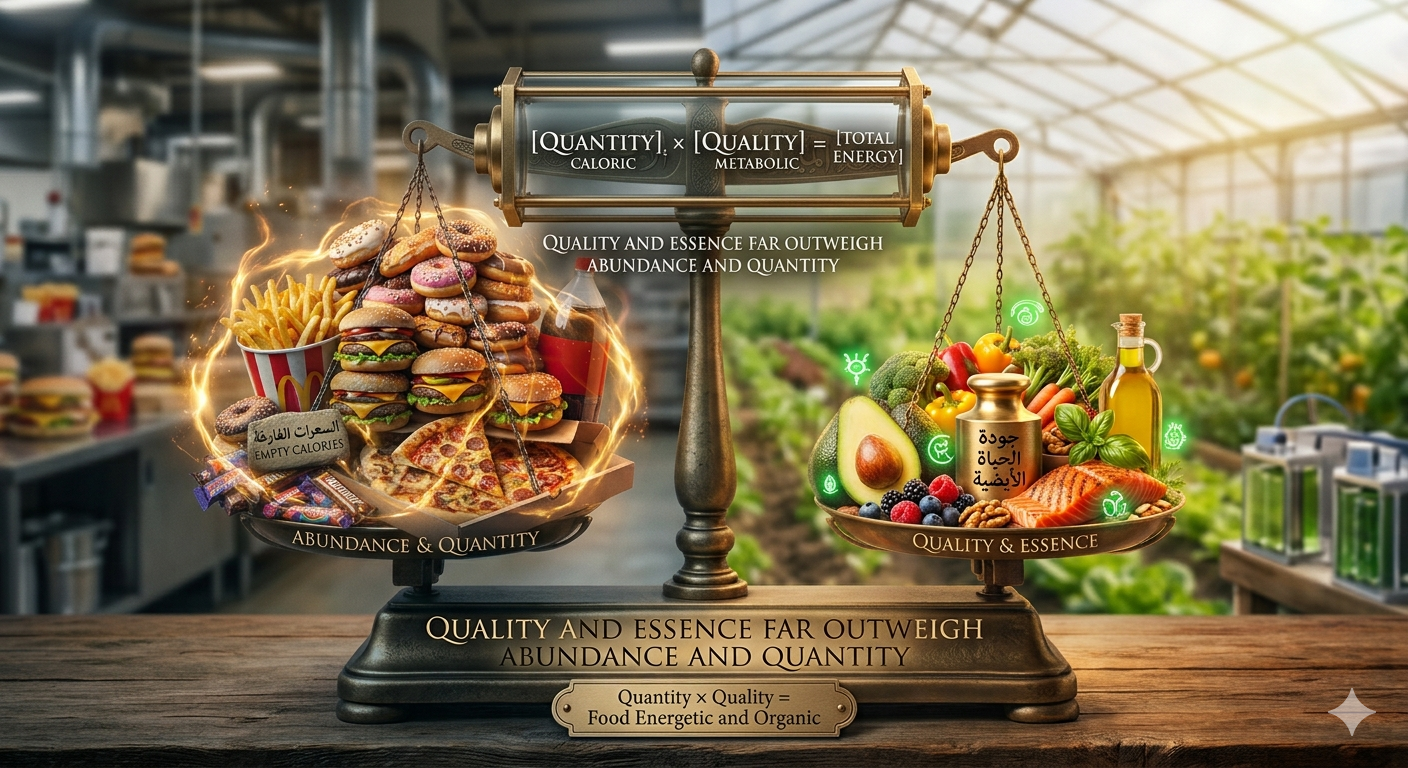
“Quality and essence far outweigh abundance and quantity.”
Dr. ABDULRAZZAQ HASHIM ALOUJAILI


 English
  العربية