
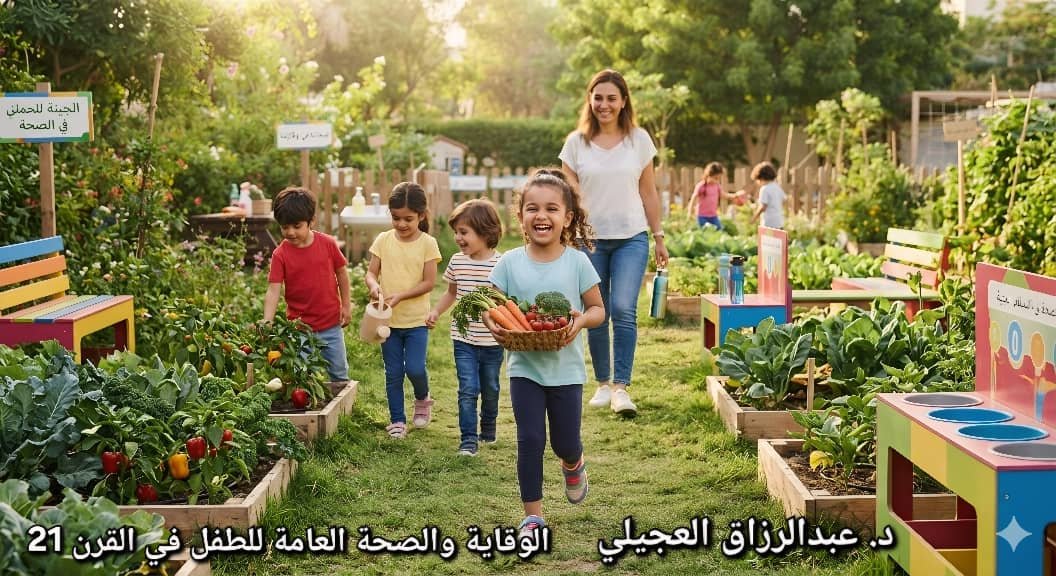
Dr. Abdulrazzaq Al-Oujaili
Introduction: The Twenty-First-Century Child Between the Hammer of Progress and the Anvil of Chaos
The world in the twenty-first century is undergoing technological, economic, and social leaps unlike anything humanity has witnessed before. While these transformations have delivered advanced medical solutions and raised the ceiling of material well-being, they have simultaneously created a complex and distorted environment that has directly affected their weakest link: the child. The concept of “child public health” is no longer limited to securing basic vaccinations or treating passing colds; it has expanded to include protecting the child from an integrated system of newly emerging threats imposed by the chaos of the digital age, novel environmental pollutants, disrupted processed-food systems, and the pressures of contemporary life that erode both mental and physical health.
This study sheds light on the state of preventive child care amid this sweeping chaos, surveying the most prominent emerging challenges and analyzing contemporary threats, while laying out practical, evidence-based preventive strategies to redirect the compass of public health toward securing a safe and sustainable childhood.
Chapter One: Emerging Threats to Child Health in the Digital Age
1. Digital Capture, Electromagnetic Pollution, and Visual Overload
Blue screens (smartphones, tablets, television) have shifted from being occasional entertainment tools to becoming a kind of “substitute caregiver” with whom the child spends long hours. Recent public health studies indicate that excessive screen exposure negatively restructures the developing child’s brain, reducing the formation of neural connections responsible for sustained focus, emotional regulation, and live social interaction. Moreover, the blue light emitted by these devices suppresses melatonin secretion, leading to severe sleep disturbances that in turn affect the child’s physical growth and daytime cognitive abilities.
2. Physical Inactivity Syndrome and Early Skeletal Disorders
In the current century of chaos, open spaces and traditional physical play have receded in favor of electronic games and prolonged sitting. This sedentary behavior has given rise to health problems once exclusive to adults, such as chronic neck pain (known as “text neck”), spinal curvatures resulting from poor sitting posture, as well as relative atrophy in connective-tissue efficiency and early low bone density due to the absence of gravity-resistant physical activities such as running and jumping.
Chapter Two: The Chaos of Contemporary Nutrition and the Ticking Bomb of Chronic Disease
1. Fast Food and Ultra-Processed Foods
The twenty-first-century child faces a fierce marketing siege from giant food companies promoting foods devoid of nutritional value yet loaded with sodium, trans fats, and refined sugars. These foods not only cause severe obesity but also disrupt the “microbiome” (the beneficial gut bacteria), which modern science has shown constitutes 70% of a child’s immune system and directly affects neurotransmitters and mood via the gut-brain axis.
2. Childhood Obesity and the Early Priming for Metabolic Disease
Childhood obesity has become a global epidemic sweeping through developing and developed societies alike. A child becoming obese at an early age means priming their cells for “insulin resistance,” the principal precursor to type 2 diabetes, arterial hypertension, and fatty liver accumulation by adolescence — shortening healthy life expectancy and placing enormous economic burdens on health systems.
Chapter Three: Contemporary Environmental Pollutants and Respiratory/Immune Challenges
1. Particulate Air Pollution (PM2.5) and Urban Sprawl
Today’s generations breathe air saturated with fine particles from car exhaust, industrial emissions, and fires caused by climate change. Because children’s breathing rate is faster than adults’ and their lungs are still developing, they absorb larger quantities of these toxins. This has led to sharp increases in chronic bronchial asthma, nasal allergies, and an overall decline in lung function efficiency.
2. Microplastics and Hormonal Disruption
One of the most dangerous features of the twenty-first century is the infiltration of microplastic particles into drinking water, seafood, and even breast milk and plastic baby bottles when heated. These particles, along with associated chemicals such as Bisphenol A (BPA), act as “endocrine disruptors,” mimicking natural hormones in the child’s body — leading to precocious puberty in girls, delayed sexual development in boys, and impaired thyroid function.
Chapter Four: Preventive Care from a Psychological and Social Perspective
1. The Epidemic of Anxiety, Depression, and Identity Disorders Among Youth
The social chaos resulting from the openness of the virtual world has exposed children and adolescents to compound psychological stress. Constant comparisons on social media contribute to distorted body image among children and undermine their self-confidence, producing a generation suffering from unprecedented levels of depression, anxiety, body dysmorphia, and self-harming behaviors.
2. Cyberbullying and the Absence of Safety at Home
Bullying is no longer confined to the schoolyard; it now follows the child into their bedroom, through their screen, around the clock, via cyberbullying. The absence of conscious parental oversight, combined with weak channels of warm dialogue within the family, leaves the child suffering in silence — later translating into sharp academic decline, social withdrawal, or even psychosomatic physical symptoms such as chronic stomachaches and headaches with no clear medical cause.
Chapter Five: The Vaccine Crisis and Waves of “Scientific Doubt” Across Digital Space
1. The Anti-Vaccination Movement and the Impact of Rumors
Although vaccines are the greatest preventive achievement in the history of modern medicine, the information chaos of the twenty-first century has allowed conspiracy theories and misinformation about vaccine safety to spread. Social media algorithms have helped circulate false claims linking vaccines to autism or immune disorders (despite these being conclusively refuted scientifically), prompting some parents to forgo immunizing their children.
2. The Return of Forgotten Diseases and the Breach of Herd Immunity
As immunization rates have declined in certain pockets and communities, the world has in recent years witnessed a grim return of diseases once thought eradicated or fully contained, such as measles, whooping cough, and polio. This regression represents a stark threat to global health security and reflects how the chaos of digital platforms can undo decades of dedicated work in public health and preventive medicine.
Chapter Six: Strategies and Architecture of Contemporary Preventive Care (A Practical Guide for the Future)
To confront these compound challenges, a modern preventive strategy must be crafted that goes beyond traditional methods and embraces smart, flexible, and sustainable solutions involving every sector of society:
First: The Engine of Government Policy and Strict Legislation
- Governance of food advertising: Impose a total ban on advertisements for fast food and soft drinks targeting children on television and digital platforms, while requiring companies to display clear warning labels (color-coded indicators of high sugar and fat content).
- Child-friendly urban planning: Require real-estate developers to include green spaces and safe pedestrian and cycling paths in every residential neighborhood, to encourage spontaneous physical activity and cleaner surrounding air.
- Digital legislation to protect minors: Enact strict laws requiring technology companies to develop robust protective algorithms that prevent access to harmful content or advertising targeted at children, and to set automatic daily time limits on entertainment apps for minors.
Second: Family Empowerment and Internal Organization (The System of Home Awareness)
- Apply an updated “2-0” digital rule: Completely prohibit screen exposure for children under two, and allow one supervised, conditional hour of screen time for children aged 3–6, replacing it with interactive physical activities and paper storybooks.
- Humanizing home meals and collaborative cooking: Revive the culture of the “clean kitchen” at home, involve children in preparing their meals to familiarize them with real food ingredients, and replace processed juices with whole, fiber-rich fruit.
- Building emotional resilience and psychological support: Dedicate daily technology-free time for talking and actively listening to children, to detect early signs of anxiety or bullying and provide a warm, containing environment that shields them from the toxins of the virtual world.
Third: The School as an Integrated Preventive Environment (Not Merely an Educational Incubator)
- Reforming school canteens: Ban the sale of processed foods, sweets, and soft drinks within schools, replacing them with balanced, subsidized meals containing proteins, whole grains, and fresh vegetables.
- Embedding preventive culture in curricula: Teach digital critical-thinking skills (to detect misinformation online), personal hygiene basics, and emotional and stress management as an integral part of the child’s academic assessment.
- Activating comprehensive early screening: Conduct mandatory annual checkups covering vision, hearing, mental health, and BMI, linking the results to the child’s electronic health record at primary care centers for immediate intervention when any health deviation is detected.
Solutions to Advance Child Health in Our Contemporary Society
To advance the child health system in our contemporary society and move it from a “disease treatment” phase to a “sustainable wellness building” phase, we need applied solutions that merge technological progress with social cohesion. Below is a comprehensive roadmap of solutions capable of bringing about a qualitative shift in our children’s health:
1. Digital and Technological Innovation (Smart Preventive Medicine)
- A “Smart Self-Health Record” app: Launch a unified government app for every child from birth that predicts vaccination dates, tracks the growth curve (weight and height), and sends smart alerts to the mother based on the child’s age.
- Virtual school clinics: Link school clinics to central medical platforms enabling consulting physicians to examine children remotely in emergency or routine cases, saving parents time and ensuring immediate care.
- Producing interactive counter-content: Develop specialist-backed electronic games and apps that teach children healthy habits (such as toothbrushing and eating vegetables) through gamification.
2. The Educational and School Environment (The Health Incubator)
- Green canteens: Completely ban the sale of any processed foods, soft drinks, or artificially colored beverages within schools, replacing them with a “healthy meal subscription” system that provides fresh, calorie-calculated meals for each age group.
- Mandatory “daily physical activity period”: Amend curricula to include 45 minutes of daily physical activity and group games, rather than confining sport to a single weekly period, to combat the inactivity of the digital age.
- Incorporating “psychological resilience” skills into curricula: Teach emotion-management skills, how to deal with bullying (both real-world and online), and anxiety reduction as a core part of school activities.
3. Family Empowerment and Parental Awareness (The First Line of Defense)
- A “Conscious Parenthood” license: Organize mandatory or incentivized training courses for those about to marry and new parents, focused on proper nutrition, understanding the gut microbiome, and managing screen time.
- A “Homes Free of Technology Toxins” initiative: Encourage families to adopt a “screen-free zones” policy (such as bedrooms and the dining table), and to set aside one daily hour for pure human connection and shared reading.
- Reviving the “clean kitchen and meal prep” culture: Equip parents with quick, healthy cooking skills, and involve children in food preparation to break their psychological attachment to processed fast food.
4. A Balanced Biological Diet for the Child
The core pillars of a biological nutrition system are:
- Living, whole foods: Serve food in its natural, original form (vegetables, fruits, whole grains, nuts) and avoid “dead,” processed and packaged foods entirely.
- Zero chemicals: Choose organic foods as much as possible to spare the child’s body from pesticide residues, antibiotics, and hormones associated with commercial meat.
- Focus on biodiversity: Vary food sources daily to ensure the child’s gut is supplied with different strains of beneficial bacteria that build immunity.
The gut is the child’s “second brain”: To nourish it, one must incorporate:
- Probiotics (live bacteria): such as natural (unflavored) yogurt, kefir, and mild homemade pickles (like cucumbers prepared with sea salt).
- Prebiotics (bacterial food): fibers that feed these bacteria, such as whole oats, bananas, unpeeled apples, onions, and garlic.
Smart fats for brain building: 60% of a child’s brain is made up of fat. The biological system focuses on unsaturated fats:
- Omega-3: found in fatty fish (salmon, sardines), chia seeds, and flaxseed.
- Monounsaturated fats: avocado, cold-pressed extra virgin olive oil, and natural nut butters (cashew and almond).
Clean proteins and complex carbohydrates:
- Proteins: free-range eggs, legumes (lentils, chickpeas), and organic chicken.
- Carbohydrates: quinoa, sweet potato, and brown rice, which provide the child with sustained energy without causing sudden spikes in blood sugar.
Conclusion
As we conclude this scientific voyage into the world of child health, we recognize that protecting our children in contemporary society is no longer a fleeting educational duty, but a great humanitarian mission and a sovereign investment that shapes the features of tomorrow. Today’s child is the leader, the innovator, and the builder of tomorrow; equipping them with an integrated biological system, smart preventive care, and psychological resilience amid the chaos of the digital age is the most precious gift we can offer humanity. The path may seem full of challenges, but with shared awareness, sincere will, and continuous small steps, we all have the power to turn our homes and schools into impregnable fortresses pulsing with wellness and life. Let us not wait for tomorrow to fix what chaos has broken — let us begin today: with a plate of clean food, an hour of warm human connection, and a conscious decision that protects the innocence of childhood and unleashes its dormant potential toward a brighter, safer future.
Dr. Abdulrazzaq Hashem Al-Oujaili


 English
  العربية
“موضوع في غاية الأهمية! نحن بحاجة ماسة لمثل هذه المقالات التي تربط بين الصحة العامة والوعي
الأسري في عصر التكنولوجيا. بارك الله في جهودكم.”
“سعيدة جداً بكوني جزءاً من مجتمع يتبنى هذه القيم الصحية والوقائية.”