By : Dr. Abdulrazzaq Hashim Al-Oujaili
- Introduction: Oxygen as a Central Metabolic Element
In human perception, the concept of respiration is commonly associated with the lungs and respiratory tract. However, the biological reality lies deep within the cells, where oxygen (O₂) serves as the true fuel that powers the mitochondria—the cell’s energy-producing organelles. Without this essential gas, the body is unable to extract the energy stored within the chemical bonds of nutrients. Consequently, cellular biosynthesis, repair, and regeneration cease, leading to the collapse of cellular homeostasis and ultimately cell death.
Over recent decades, scientific attention has shifted from the study of pulmonary gas exchange alone to the broader concept of cellular oxygenation. Research has demonstrated that tissue oxygen levels depend not only on the efficiency of the respiratory and cardiovascular systems but are also profoundly influenced by dietary patterns and food quality.
Although foods do not contain oxygen in its free gaseous form, certain foods are scientifically recognized as oxygen-promoting or cellular oxygen-generating foods. Through sophisticated biochemical mechanisms, these foods enhance blood circulation, improve hemoglobin efficiency, stimulate mitochondrial function, and promote the endogenous production of antioxidant defenses.
This study aims to elucidate the intricate relationship between nutrition, cellular oxygenation, and the body’s intrinsic mechanisms of self-healing.
Biological Relationship Between Nutrition and Cellular Oxygenation
To understand how food can “generate” or enhance oxygen utilization within the body, one must first examine the process of cellular respiration.
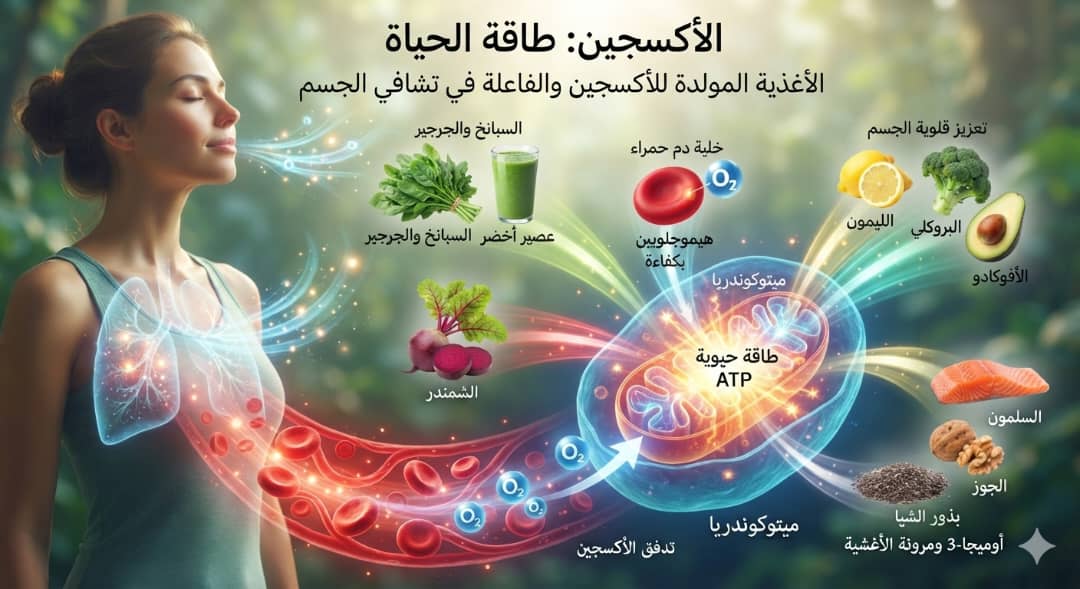
Oxygen enters the lungs during inhalation and binds to the iron atom within hemoglobin molecules contained in red blood cells. It is then transported through arteries, capillaries, and the microcirculation until it reaches the interstitial fluid surrounding cells, from which it diffuses across selectively permeable cell membranes into the intracellular environment.
2. This remarkable journey—from pulmonary oxygen uptake to mitochondrial ATP production—requires an optimal biochemical environment to proceed efficiently.
Vascular Flexibility
Healthy, elastic blood vessels allow red blood cells to pass through the narrowest capillaries supplying peripheral tissues and deep organs, ensuring adequate oxygen delivery.
Acid–Base Balance (pH)
The affinity of hemoglobin for oxygen, as well as oxygen release to tissues, is tightly regulated by blood and tissue pH through the Bohr Effect. Excessive tissue acidity may impair efficient oxygen transport and delivery by altering hemoglobin’s oxygen-binding characteristics.
Integrity of the Cellular Membrane
Cell membranes consist primarily of a phospholipid bilayer. When these lipids become oxidized or rigid—particularly due to excessive consumption of trans fats—the passive diffusion of oxygen into cells becomes less efficient.
This is where nutrition assumes a fundamental role. Phytochemicals, essential minerals, vitamins, and essential fatty acids found in specific foods serve as the molecular tools that preserve the integrity of the body’s oxygen transport and utilization systems.
Classification of Cellular Oxygen-Generating Foods and Their Mechanisms of Action
Rather than supplying oxygen directly, oxygen-promoting foods provide biologically active compounds that enhance the body’s ability to absorb, transport, and efficiently utilize oxygen.
Based on their molecular mechanisms, these foods can be classified into four principal categories.
A. Foods Rich in Natural Nitrates (Natural Vasodilators)
Dark leafy vegetables and root vegetables—including beetroot, arugula, spinach, and radish—are among the richest dietary sources of inorganic nitrate (NO₃⁻).
Molecular Mechanism
Following ingestion, oral bacteria reduce nitrate to nitrite (NO₂⁻), which is subsequently converted in the stomach and peripheral tissues into nitric oxide (NO).
Nitric oxide is a potent endogenous vasodilator that relaxes the smooth muscle lining blood vessels, thereby increasing vascular diameter.
Oxygenation Effect
Vasodilation reduces vascular resistance and significantly enhances oxygen-rich blood flow to muscles, the brain, and peripheral tissues.
3. Clinical studies in sports medicine have demonstrated that beetroot juice reduces the oxygen cost of exercise, indicating improved mitochondrial efficiency and enhanced ATP production using available oxygen.
B. Chlorophyll-Rich Foods (The Green Blood of Plants)
Chlorophyll is abundant in green plants such as wheatgrass, spirulina, chlorella, and broccoli.
Molecular Mechanism
The molecular structure of chlorophyll closely resembles that of the heme molecule found in human hemoglobin. The primary structural difference lies in the central atom: hemoglobin contains iron (Fe), whereas chlorophyll contains magnesium (Mg).
Oxygenation Effect
Dietary chlorophyll may support erythropoiesis (red blood cell production) within the bone marrow while improving hemoglobin quality.
An increased number of healthy red blood cells enhances the blood’s overall oxygen-carrying capacity, facilitating more efficient oxygen transport from the lungs to body tissues.
C. Alkalizing Foods (Regulation of Physiological pH)
This category includes citrus fruits (despite their acidic taste), cabbage, cucumber, avocado, and almonds.
Molecular Mechanism
Following digestion and metabolism, these foods produce an alkaline mineral residue rich in potassium, calcium, and magnesium. These minerals support the body’s buffering systems, helping maintain the optimal physiological blood pH of approximately 7.35–7.45.
Oxygenation Effect
According to principles of physical chemistry, mildly alkaline biological fluids can retain greater amounts of dissolved oxygen than acidic environments.
Furthermore, appropriate acid–base balance facilitates oxygen dissociation from hemoglobin, allowing oxygen to diffuse more effectively through interstitial fluid into cells.
D. Foods Rich in Essential Fatty Acids (Maintaining Cellular Membrane Integrity)
Major sources include fatty fish such as salmon and sardines, flaxseed, chia seeds, and walnuts, all of which are rich in omega-3 fatty acids.
Molecular Mechanism
Omega-3 fatty acids are directly incorporated into membrane phospholipids throughout the body.
Oxygenation Effect
These fatty acids enhance membrane fluidity, thereby improving gas exchange and facilitating the rapid diffusion of oxygen and nutrients into the cytoplasm and mitochondria.
At the same time, they promote efficient removal of carbon dioxide and metabolic waste products, supporting optimal cellular respiration and energy production.
4. The Third Axis: The Role of Oxygen and Nutrition in Cellular Healing and the Management of Chronic Diseases
The Nobel Prize-winning scientist Dr. Otto Warburg famously stated: “The primary cause of cancer is the replacement of oxygen respiration in normal body cells by anaerobic fermentation.” Although cancer is now recognized as a complex, multifactorial disease, Warburg’s hypothesis drew attention to an enduring biological principle: cellular hypoxia provides a favorable environment for the development and progression of many chronic and degenerative diseases.
Mitochondrial Activation and Regenerative Medicine
The body’s capacity for self-repair—including autophagy and tissue regeneration—depends largely on the availability of cellular energy. When oxygen delivery is optimized through appropriate nutrition, mitochondria regain their functional efficiency. Enhanced oxygen availability supports mitochondrial metabolism, promotes cellular recovery, protects cells from premature programmed cell death (apoptosis), and may contribute to the activation and differentiation of endogenous stem cells involved in the regeneration of damaged tissues in the liver, kidneys, skin, and vascular system.
The Fourth Axis: The Oxygen Paradox and Dietary Antioxidants
While oxygen is indispensable for life and cellular energy production, its biological role also presents what is known as the Oxygen Paradox. During mitochondrial oxidative metabolism, oxygen generates chemically reactive by-products known as Reactive Oxygen Species (ROS), commonly referred to as free radicals.
When ROS production exceeds the body’s antioxidant defense capacity, these reactive molecules can damage DNA, oxidize cellular proteins and lipids, and contribute to chronic tissue injury, accelerated aging, and numerous diseases.
This highlights the second essential component of oxygen-supportive nutrition: foods rich in potent antioxidants.
Major Antioxidant-Rich Foods
To protect tissues during oxygen-dependent healing processes, the diet should include abundant sources of natural antioxidants:
Blueberries, wild berries, and black grapes are rich in anthocyanins and resveratrol, compounds that help protect blood vessels from oxidative damage and vascular stiffening.
Turmeric (Curcumin) is among the most powerful natural anti-inflammatory compounds and has been shown to support endogenous glutathione production, the body’s principal intracellular antioxidant.
Vitamin C-rich fruits, including kiwi, strawberries, guava, and citrus fruits, function as water-soluble antioxidants by donating electrons to neutralize free radicals before they can damage cellular membranes.
Nuts and seeds, excellent sources of vitamin E, protect membrane lipids against oxidative degradation and lipid peroxidation.
Combining oxygen-promoting foods with antioxidant-rich foods creates a balanced physiological state known as redox homeostasis, allowing the body to maximize the benefits of oxygen metabolism while minimizing oxidative damage.
The Fifth Axis: Designing an Integrated Nutritional Protocol for Oxygenation and Healing
To translate these molecular and physiological principles into practical daily application, an integrated nutritional protocol can be developed that combines oxygen-supportive foods with antioxidant-rich nutrients to promote vitality, tissue repair, and metabolic efficiency.
Core Components of the Daily Protocol
Live Green Juice (Morning Oxygenation Boost)
A blend of wheatgrass or spinach, arugula, cucumber, and half a lemon provides a concentrated source of chlorophyll for hematopoietic support, alkaline minerals for pH balance, and natural nitrates to enhance morning vascular function.
Root Vegetable Salad (Before Physical or Mental Activity)
A salad consisting of grated beetroot, radish, and carrots dressed with extra virgin olive oil provides sustained nitric oxide production, improving cerebral and systemic blood flow while enhancing concentration, endurance, and physical performance.
Clean Protein Rich in Omega-3 Fatty Acids (Regenerative Meal)
Regular consumption of wild-caught fish, flaxseed, or chia seeds supplies essential omega-3 fatty acids that maintain cellular membrane fluidity, facilitating oxygen diffusion into mitochondria and optimizing ATP production.
Lifestyle Practices Supporting Nutritional Oxygenation
Nutrition functions most effectively when integrated with lifestyle practices that promote efficient oxygen utilization.
Moderate aerobic exercise, such as brisk walking or cycling, increases cardiac output and enhances the delivery of oxygen-rich blood throughout the body.
Diaphragmatic breathing improves pulmonary oxygen saturation, complementing the vascular benefits provided by a healthy diet.
Adequate hydration with pure or mineral-rich water supports blood fluidity and facilitates the transport of magnesium, potassium, nitrates, and other essential nutrients involved in oxygen metabolism.
Medicinal Mushrooms and Their Potential Role in Enhancing Blood Oxygenation
Medicinal mushrooms have attracted increasing scientific interest because of their biologically active compounds that may support oxygen utilization, improve circulation, and enhance pulmonary function.
Among the most extensively studied species are Cordyceps and Reishi, both of which have demonstrated potential benefits in improving physiological adaptation to hypoxic conditions.
Mechanisms Through Which Medicinal Mushrooms May Enhance Oxygen Utilization
Enhanced Cellular Energy (ATP Production)
Cordyceps has been reported to increase cellular ATP synthesis, thereby improving muscular efficiency and oxygen utilization during physical activity.
Bronchodilation
Certain bioactive compounds found in medicinal mushrooms may promote relaxation of airway smooth muscles, potentially facilitating greater oxygen uptake during respiration.
Stimulation of Erythropoietin (EPO)
Experimental studies suggest that Cordyceps extracts may stimulate erythropoietin (EPO) production, a hormone responsible for increasing red blood cell formation and oxygen-carrying capacity.
Improved Circulation
Medicinal mushrooms contain adenosine and other bioactive molecules that may support healthy circulation by reducing platelet aggregation and promoting vasodilation, thereby facilitating oxygen delivery to peripheral tissues.
Principal Oxygen-Supportive Medicinal Mushrooms
Cordyceps
Often referred to as the “energy mushroom,” Cordyceps has been associated with improvements in maximal oxygen uptake (VO₂max) and enhanced exercise endurance by accelerating lactate clearance.
Reishi
Known in traditional Asian medicine as the “Mushroom of Immortality,” Reishi has traditionally been used to support respiratory health, alleviate symptoms associated with asthma and shortness of breath, and improve physiological adaptation to high-altitude environments where oxygen availability is reduced.
Conclusion: Oxygen and Nutrition as a Future Therapeutic Paradigm
This comprehensive review demonstrates that oxygen represents the fundamental driving force underlying virtually every aspect of human physiology. Oxygen is far more than an inhaled gas; it is an integrated bioenergetic system that enables nutrients to be transformed into usable cellular energy while supporting the body’s innate capacity for repair and regeneration.
The transition from conventional symptom-oriented medicine toward optimizing the internal cellular environment through oxygen-supportive nutrition represents one of the cornerstones of modern Functional Medicine.
Providing cells with chlorophyll to support hemoglobin synthesis, natural nitrates to enhance vascular function, alkaline minerals to optimize physiological oxygen balance, and essential fatty acids to maintain membrane integrity—while simultaneously protecting tissues through a robust supply of dietary antioxidants—offers the human body powerful mechanisms for defense, repair, and resilience.
Ultimately, when supported by sound nutritional balance, oxygen remains the true fuel and energy of life, serving as the primary engine of a healthy, vibrant, resilient, and continually renewing human body capable of resisting disease and slowing the processes of aging.
DR. Abdulrazzaq Hashim Al Oujaili


 English
  العربية