
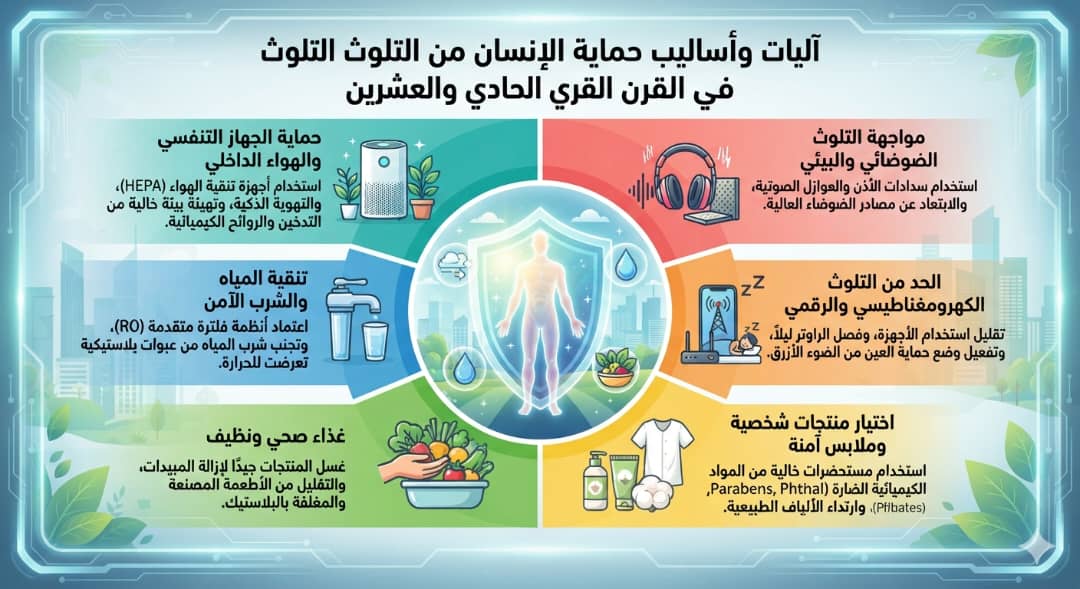
Mechanisms and Methods for Protecting Human Health from Pollution in the 21st Century
By Dr. ABDULRAZZAQ HASHIM ALOUJAILI
Introduction
In the 21st century, humanity faces unprecedented environmental challenges that differ fundamentally from previous eras. Pollution is no longer limited to visible smoke or exposed solid waste in the streets. Today, pollution has transformed into microscopic, invisible entities that penetrate human cells and disrupt vital biological systems. Modern pollutants include fine particulate matter, microplastics, digital and electromagnetic pollution, and “forever chemicals.” Countering these risks requires integrated protective strategies that combine modern technology with daily behavioral changes. This study aims to provide a comprehensive, scientifically backed, and practical guide to protecting personal health from modern-day pollutants.
Chapter 1: Countering Air Pollution and Particulate Matter
The Nature of the 21st-Century Threat Air pollution is the single largest silent killer of the modern era, according to World Health Organization reports. The greatest danger lies in fine particulate matter, specifically PM2.5 and PM0.1, generated by vehicle exhaust and industrial emissions. These microscopic particles can completely bypass the human respiratory system’s natural defense filters in the nose and throat. They penetrate deep into the lungs and enter the bloodstream directly, causing blood clots, heart disease, and strokes. Personal and Home Protection Mechanisms Air Quality Monitoring Apps:
- Install smartphone applications to track the local Air Quality Index (AQI) daily. Avoid outdoor exercise entirely whenever the local index exceeds 100 points.
- Plan outdoor activities during times when pollution levels drop, such as early morning. Home Air Purification Technologies:
- Use indoor air purifiers equipped with high-efficiency HEPA filters in bedrooms and offices.
- Replace filters regularly and consistently to ensure their ability to trap ultra-fine particles.
- Avoid using incense, scented candles, and chemical air fresheners, which spike indoor air pollution.
- Smart Ventilation and Botanical Aid: Open windows for ventilation only during hours when nearby traffic congestion is at its lowest. Incorporate indoor plants known for their proven ability to absorb volatile organic compounds (VOCs).Plants like the “Snake Plant” and “Peace Lily” are excellent choices to help purify room air.
Chapter 2: Combating Microplastics.
The Hidden Danger in Food and Water
Plastic has become an inseparable part of the human food chain in this century. Plastic waste degrades in the environment into microplastic particles that are completely invisible to the naked eye. Recent studies have confirmed the presence of these particles in human blood, lungs, and even placental tissue. These pollutants primarily enter our bodies through food packaging, bottled water, and synthetic fiber clothing. Practical Steps to Reduce Microplastic Ingestion Upgrading Cookware and Food Storage: Completely eliminate plastic containers when heating food in the microwave to prevent chemical migration. Replace plastic food storage boxes with containers made of heat-resistant glass or stainless steel. Use wooden or metal cooking utensils instead of plastic ones that erode under high heat. Water Filtration Management: Avoid total reliance on single-use plastic water bottles, especially shipments stored in direct sunlight. Install advanced home water filtration systems utilizing reverse osmosis (RO) or activated carbon technology. These filters successfully trap a massive percentage of microplastic fibers and dissolved heavy metals. Consumer Behavior and Wardrobe Adjustments: Choose clothing made of natural fibers like cotton, linen, and wool over polyester and nylon. Wash synthetic clothing using specialized laundry bags that catch microfibers before they reach wastewater networks. Reduce the purchase of pre-packaged foods wrapped in multiple layers of thermal plastic film.12
Chapter 3: Protection against Chemical Pollution and “Forever Chemicals”
The Crisis of PFAS Compounds and Heavy Metals3
Per- and polyfluoroalkyl substances (PFAS) are known as “forever chemicals” because they do not break down in the environment or the human body. These substances are heavily used in non-stick cookware, waterproof clothing, and fast-food packaging materials. They are chemically linked to hormonal disruptions, weakened immune systems, and elevated blood cholesterol levels. Prevention and Exposure Mitigation Methods Shifting to Safe Cookware: Discontinue the use of traditional non-stick pans immediately once they show surface scratches or peeling. Transition to cookware made from cast iron, pure ceramic, or high-quality stainless steel. These stable materials guarantee that no toxic compounds leach into food during long cooking processes. Scrutinizing Personal Care Products:
- Read the ingredients of cosmetics, shampoos, and deodorants before purchasing to avoid parabens and phthalates. Select products bearing certified labels confirming they are free of hazardous synthetic chemicals and artificial dyes. Rely on natural oils and plant extracts for skin and hair care whenever practical.
- Washing and Selecting Food with Caution: Soak vegetables and fruits in water mixed with baking soda or vinegar to remove residual chemical pesticides.
- Discard the outer layers of leafy vegetables and peel thick-skinned fruits to minimize chemical ingestion.
- Support organic and local produce grown using sustainable farming methods free of synthetic chemicals.
Chapter 4: Digital and Electromagnetic Pollution
The Challenge of Living in a Network-Saturated Environment
With the widespread adoption of 5G networks, Wi-Fi, and smart devices, humans now swim in a constant sea of electromagnetic waves.
While definitive scientific consensus on the exact severity of the risk is ongoing, multiple studies link prolonged exposure to poor sleep quality and nervous system fatigue . To this is added digital visual pollution caused by “blue light” emitted from electronic screens around the clock. Strategies to Reduce Digital and Electromagnetic Pollution Securing a Digital-Free Sleep Environment:
- Turn off the home Wi-Fi router completely before going to sleep to eliminate continuous nighttime radiation waves.
- Keep mobile phones and tablets at a distance of at least two meters away from the bed during sleep. Ban electronic devices and screens from children’s bedrooms entirely to ensure healthy neurological development.
- Protecting Eyes and the Body from Blue Light:
- Activate the “Eye Comfort Shield” or “Night Mode” across all smart devices to minimize blue light emission.
- Wear prescription or computer glasses fitted with specialized blue-light-blocking filters during long work sessions. Implement the 20-20-20 rule:
- look at an object 20 feet away for 20 seconds every 20 minutes of screen time. Practicing Regular Digital Detoxes: Dedicate one day a week or specific hours daily to unplugging completely from all electronic screens. Spend this disconnected time in nature, reading physical books, or engaging in direct social and physical activities. This practice helps rebalance dopamine levels and reduces nervous system exhaustion caused by constant digital stimulation.
Chapter 5: Noise Pollution and Its Impact on Mental and Physical Health
The Modern Urban Crisis
Noise pollution from transportation networks, construction work, and high-density urban populations is a hallmark of this century. Continuous background noise does not just damage hearing; it triggers the chronic release of stress hormones like cortisol and adrenaline. This ongoing biological activation leads to elevated blood pressure, impaired concentration, and chronic degradation of deep sleep. Mechanisms of Defense and Protection against Noise Acoustic Insulation for Homes: Install double or triple-glazed glass windows to block street noise from leaking inside. Use heavy drapes and thick carpets, which effectively absorb internal echoes and external sound frequencies. Seal structural gaps under doors and around window frames using specialized rubber weatherstripping tape. Utilizing Personal Noise-Canceling Technology: Invest in high-quality headphones equipped with Active Noise Cancellation (ANC) technology for work or travel. Use medical-grade silicone or foam earplugs when sleeping in naturally noisy urban environments. Run white noise machines in the bedroom to mask sudden, disruptive external noises.
Chapter 6: Enhancing Biological Defenses (Protection from Within)
Building the Core Line of Defense
Because total isolation from 21st-century pollutants is impossible, strengthening the human body internally is a vital necessity. The human body possesses highly sophisticated detoxification systems (primarily the liver and kidneys), but these organs require continuous support to handle the increased modern toxic workload. Pillars of Internal Biological Support An Antioxidant-Rich Diet:
- Focus heavily on consuming foods rich in essential vitamins like Vitamin C, Vitamin E, and the mineral Selenium. Eat cruciferous vegetables (such as broccoli, cabbage, and cauliflower) containing compounds that directly optimize liver detoxification pathways . Include blueberries, green tea, and fresh garlic in your daily diet to neutralize free radicals caused by environmental pollution. Efficient and Hydrated Cellular Health:
- Drink at least 2 to 3 liters of filtered water daily to accelerate the kidneys’ ability to flush out toxins. Never drink water from plastic containers left in high temperatures to prevent chemical leaching into the water. Add slices of fresh lemon or cucumber occasionally to support alkalinity and assist the body in cellular rejuvenation. Targeted Sleep and Physical Activity:
Prioritize 7 to 8 hours of quality nighttime sleep, as vital cellular repair mechanisms peak during deep sleep cycles. Exercise regularly to stimulate blood circulation and enhance the elimination of toxins through sweat. Choose exercise venues far away from major highways and industrial sources to ensure you inhale clean oxygen.
Chapter 7 : Foods That Protect Against Environmental Pollution
Certain foods rich in antioxidants, vitamins, and minerals help protect the body and reduce damage caused by free radicals and toxins linked to environmental pollution. These foods include leafy greens, berries, garlic, nuts, and citrus fruits
Pollution-Fighting Foods
- Powerful Antioxidants: Berries, strawberries, and dark chocolate fight free radicals caused by air pollution.
- Detox and Sulfur Foods: Garlic, onions, and cilantro support liver functions and help the body bind to and eliminate heavy metals.
- Vitamins C and E: Found in citrus fruits, almonds, olive oil, and sunflower seeds, they protect lungs and tissues from airborne pollutants.
- Natural Fibers: Apples and avocados cleanse the intestines and help lower the absorption of harmful substances
Spirulina (blue-green algae) and medicinal mushrooms (such as Reishi and Chaga) are among the most powerful natural elements that support the body against environmental pollutants and heavy metals, thanks to their unique properties in detoxifying and protecting cells.
Benefits of Spirulina Against Pollution
- Phycocyanin: A powerful antioxidant that gives spirulina its color, protecting lungs and tissues from oxidative damage caused by cigarette smoke and exhaust.
- Heavy Metal Detox: Contains polysaccharides and chlorophyll that bind to toxic metals (like lead, mercury, and arsenic) in the intestines and prevent their absorption.
- Liver and Kidney Protection: Supports liver functions (the body’s main cleansing organ) and prevents environmental toxins from damaging its cells
Benefits of Vital Mushrooms (Medicinal Mushrooms)
- Reishi Mushroom: Boosts the immune system, helps the lungs adapt to oxygen deprivation caused by polluted air, and supports the regeneration of liver cells damaged by toxins.
- Chaga Mushroom: Contains massive levels of antioxidants that neutralize free radicals resulting from radiation and environmental chemicals.
- Cordyceps Mushroom: Improves the efficiency of oxygen utilization in the body and dilates the airways, protecting the respiratory system from particulate matter suspended in polluted air
Conclusion and Recommendations
Protecting ourselves from pollution in the 21st century is no longer a luxury; it is a fundamental prerequisite for survival and longevity. This protection requires adopting a conscious, intelligent lifestyle centered on proactive prevention and reducing the use of harmful synthetic materials. Real change starts with minor, daily micro-decisions: the type of water filter used, the choice of cookware material, and managing our relationship with digital technology. By integrating these protective habits into our lives, we build a resilient, lifelong shield that guards our bodies and minds against the complexities of our modern world.
Dr. Abdulrazzaq ALOUJAILI


 English
  العربية