
Dr. Abdulrazzaq Hashem Al-Oujaili
1. Introduction and Theoretical Background
The Autonomic Nervous System (ANS) represents an infinitely complex central control network that unconsciously manages all vital involuntary physiological functions necessary for sustaining life. From regulating heart rate and arterial pressure to digestive processes, metabolism, and immune response, the influence of this system extends to link psychological and environmental states to direct organic responses. In recent decades, a qualitative leap has occurred in the biomedical understanding of how this system operates; the scientific perspective has shifted from viewing it as a merely mechanical, responsive relay network to regarding it as the primary driver of Self-Healing Mechanisms and Homeostasis in the human body.
Self-healing from a neurological perspective does not merely mean the closure of surface wounds, but encompasses the repair of cellular tissue, the combating of systemic inflammation, and the reorganization of damaged neural connections through what is known as Neuroplasticity. The contemporary research problem lies in studying how regulating the activity of the nervous system and shifting its state from “fight and flight” to “rest and repair” can stimulate the body to heal itself from chronic diseases, psychosomatic disorders, and injuries to vital tissue. This comprehensive study aims to analyze the physiological structure of the autonomic nervous system, explore the dynamic interaction between its two branches (sympathetic and parasympathetic), with particular emphasis on the role of the vagus nerve as a vital highway for recovery, and to review the scientific evidence and applied mechanisms that enable humans to reset their nervous system to achieve sustainable self-healing.
2. The Physiological Structure of the Autonomic Nervous System and Biological Balance
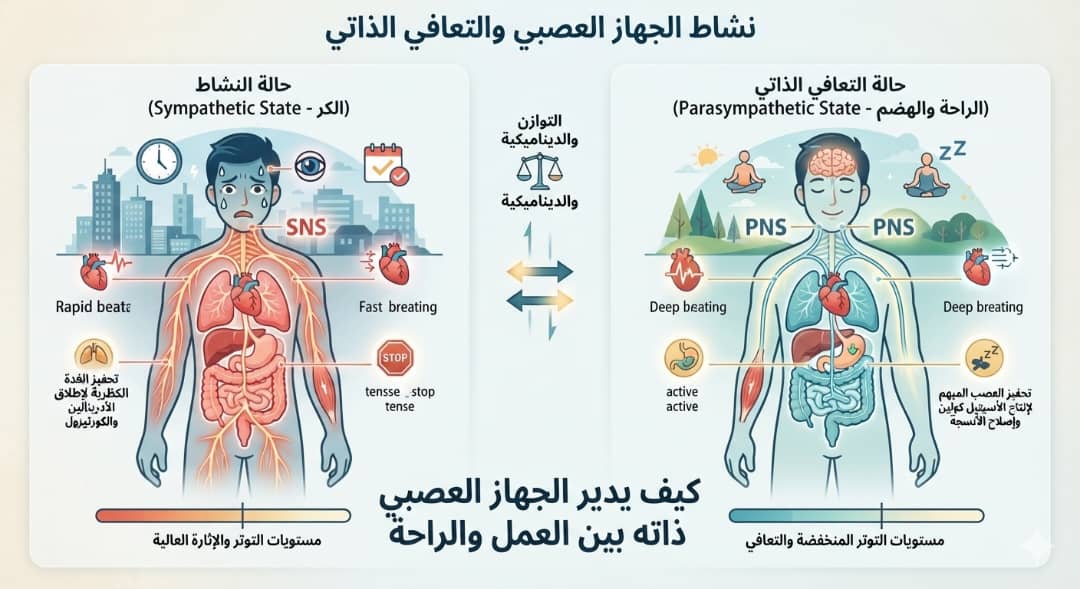
The autonomic nervous system consists of two main branches that operate in a continuous state of dynamic reciprocal balance, much like the accelerator and brake in a vehicle:
A. The Sympathetic Nervous System (SNS) Functionally known as the “Fight or Flight” system. It originates from the thoracic and lumbar regions of the spinal cord. Upon perceiving any environmental or psychological threat, this system is immediately activated, leading to the release of stress hormones such as adrenaline, noradrenaline, and cortisol into the bloodstream. Physiologically, this activity causes:
- Acceleration of heart rate to increase blood flow to skeletal muscles.
- Dilation of the pupils and bronchial airways to increase visual efficiency and gas exchange.
- Suppression of biological processes not immediately necessary during a moment of danger, such as digestion, absorption, reproduction, and long-term immune functions.
B. The Parasympathetic Nervous System (PNS) Known as the “Rest and Digest” system, or the “Feed and Repair” system. It originates from the cranial nerves (particularly the tenth cranial nerve) and the sacral region of the spinal cord. Its primary neurotransmitter is Acetylcholine, which acts to inhibit cardiac activity and stimulate constructive (anabolic) processes. Activation of this branch leads to:
- Lowering of heart rate and blood pressure.
- Stimulation of intestinal motility and secretion of digestive juices for nutrient absorption.
- Directing stored energy toward cellular repair, DNA repair, and enhanced production of antibodies and white blood cells.
Homeostasis depends entirely on the flexibility of movement between these two systems. In primitive humans, the sympathetic system would activate briefly to escape a predator, then shut off, allowing the body to return to a parasympathetic resting state. In the modern era, however, chronic psychological stress, financial worries, and constant digital stimulation keep humans in a perpetual, low-grade state of sympathetic activity. This chronic imbalance, known as Dysregulation, completely closes the windows for self-healing, paving the way for degenerative diseases and tissue damage with no opportunity for cellular repair to take place.
3. Self-Healing Mechanisms at the Cellular and Neurological Level
Self-healing is not an abstract concept but a series of specific biochemical reactions dependent on the body’s neurological state. When the parasympathetic system dominates, three major pathways of recovery are activated:
First: Reducing Systemic Inflammation via the “Cholinergic Anti-Inflammatory Pathway” Pioneering studies in neuroimmunology, particularly research led by Dr. Kevin Tracey, have established that the nervous system directly controls immune cells. When the parasympathetic system is activated, the vagus nerve releases acetylcholine, which binds to specific receptors (Alpha-7 Nicotinic Acetylcholine Receptors) on the surface of macrophages. This binding suppresses the production of inflammatory cytokines such as Tumor Necrosis Factor-alpha (TNF-alpha) and Interleukin-6 (IL-6). Since chronic inflammation is the root cause of heart disease, cancer, and arthritis, neurological calming serves as a direct, self-administered therapeutic mechanism for preventing and reversing these diseases.
Second: Stimulating Autophagy and Cellular Repair In states of neurological stability and the absence of elevated stress hormones, cortisol and insulin levels drop to a degree that allows cells to enter a maintenance phase. The process of “autophagy” is activated — a cellular recycling mechanism in which the body breaks down damaged organelles and misfolded proteins (such as the amyloid proteins associated with Alzheimer’s disease), along with internal microbes, converting them into amino acids to produce new, more efficient cells. Chronic cortisol resulting from sympathetic activity completely disrupts this vital pathway.
Third: Neuroplasticity and Synaptogenesis For a long time, a mistaken medical belief prevailed that damaged brain cells could not be compensated for or repaired. Modern neuroscience has revealed that the nervous system possesses a remarkable capacity to reorganize itself and build alternative neural pathways to bypass damaged areas (whether from a stroke or psychological trauma). This process is driven by growth proteins, most notably Brain-Derived Neurotrophic Factor (BDNF). BDNF is released abundantly when the nervous system is in a state of parasympathetic balance, supported by deep sleep and moderate physical activity, allowing neural synapses to grow and functionally recover.
4. The Vagus Nerve: The Golden Bridge to Healing
No discussion of nervous system activity and self-healing is complete without giving the Vagus Nerve its central place. The vagus nerve is the tenth cranial nerve, the longest and most branched nerve in the autonomic nervous system, extending from the brainstem through the neck and distributing to the heart, lungs, stomach, intestines, liver, and kidneys.
The vagus nerve is notable for being a bidirectional highway — yet surprisingly, 80% of its fibers are ascending sensory (afferent) fibers that carry reports on the state of the body’s organs to the brain, while only 20% are descending motor (efferent) fibers that carry commands from the brain to the organs. This means that improving the physical state of the organs (such as slowing the breath or relaxing the intestines) sends immediate signals to the brain indicating that “the body is safe,” prompting the brain to shut down the stress response and activate recovery.
The concept of “Vagal Tone” is used in modern medicine as a direct indicator of the body’s capacity to heal and restore balance. Vagal tone is measured through Heart Rate Variability (HRV). Individuals with a high HRV index experience healthy, flexible, and rapid fluctuations between a faster pulse during inhalation and a slower pulse during exhalation — evidence of a strong vagus nerve and the nervous system’s ability to shift the body into a self-healing phase as soon as an external stressor subsides. Conversely, low HRV is associated with a weakened vagus nerve, the emergence of chronic inflammation, and slower healing of wounds or organic illnesses.
5. Inhibitors and Obstacles: How We Damage the Self-Healing System
Before reviewing healing techniques, it is essential to understand the environmental and behavioral factors that destroy the flexibility of the nervous system and keep it in a state of chronic sympathetic toxicity:
- Chronic, Suppressed Psychological Stress: Unprocessed psychological trauma and constant work pressures keep the Hypothalamic-Pituitary-Adrenal (HPA) axis permanently active, flooding tissues with cortisol that prevents cell division and tissue repair.
- Environmental and Digital Disruption: Exposure to artificial blue light at night prevents the secretion of melatonin, which is not merely a sleep hormone but one of the most powerful antioxidants and neural-cell repair agents in the brain. Noise pollution in cities involuntarily stimulates the brain’s fear centers (the amygdala), automatically raising sympathetic activity.
- Leaky Gut Syndrome and Microbiome Imbalance: The Enteric Nervous System contains hundreds of millions of neurons and produces 90% of the body’s serotonin. Poor diets high in sugars and processed oils destroy beneficial bacteria, sending inflammatory signals via the vagus nerve to the brain, causing “brain fog” and microscopic central neuroinflammation.
6. Mechanisms and Techniques for Resetting the Nervous System to Stimulate Self-Healing
Based on medical and clinical evidence, humans can voluntarily intervene to activate the parasympathetic system and strengthen the vagus nerve through specific, scientifically proven behavioral and physical practices:
First: Guided Diaphragmatic Breathing and Extended Exhalation (Resonant Breathing) Breathing is the only vital function of the autonomic nervous system that humans can fully and voluntarily control. Studies have shown that applying a breathing technique of 5.5 to 6 breaths per minute (a 4-second inhale and a slow, extended 6-second diaphragmatic exhale) produces physiological resonance between the respiratory and cardiovascular systems. Extending the exhale activates baroreceptors in the carotid arteries, which send immediate signals via the vagus nerve to lower the heart rate and suppress sympathetic activity, opening an immediate cellular window for repair and self-healing.
Second: Somatic Resetting through Physical Stimulation and Therapeutic Touch Manual therapy and sensory stimulation play a fundamental role in lowering sympathetic tone. Techniques such as Myofascial Release, Swedish massage, and progressive muscle relaxation stimulate mechanoreceptors located in connective tissue. This stimulation sends ascending neural feedback through the spinal cord that inhibits sympathetic ganglion activity, helps restore balance to tense tissues, and improves the microcirculation necessary for healing muscles and peripheral nerves.
Third: Intermittent Thermal Stimulation (Thermal Hormesis) Sudden, brief exposure to cold temperatures (such as submerging the face in cold water or taking a cold shower) triggers what is known as the “Mammalian Dive Reflex.” This neurological response causes an immediate, sharp drop in heart rate and constriction of peripheral blood vessels to direct blood and oxygen to vital organs, followed by a massive compensatory surge in parasympathetic activity once the cold stimulus ends, recalibrating the entire nervous system.
Fourth: Fasting and Metabolic Switching for Neuroprotection Intermittent or extended fasting forces the body to shift from burning glucose to using ketone bodies as an energy source. Ketones are not merely fuel; they are powerful signaling molecules that stimulate the gene expression responsible for producing BDNF and work to suppress inflammation in the brain’s microglial cells, preventing cognitive decline and allowing the central nervous system to repair its damaged cellular structures.
7. Key Foods That Support the Nervous System
The health of the nervous system and the efficiency of vital signal transmission depend directly on the nutrients we consume; nerve cells require specific fats, antioxidants, and complex vitamins to build the myelin sheath (the insulating material of the nerves) and protect it from degradation and inflammation. Below is a list of the most scientifically supported foods for enhancing nervous system health:
- Fatty Fish (The Lifeline of the Nerves) — Salmon, sardines, and tuna: the primary source of omega-3 fatty acids (especially EPA and DHA). Neurological importance: these fats make up 60% of brain and nerve cell composition, contributing directly to cell membrane construction, reducing inflammation, and enhancing memory and neuroplasticity.
- Dark Leafy Greens (The Motor Protection Shield) — Spinach, broccoli, and jute mallow (mulukhiyah): rich in folic acid (vitamin B9) and vitamin K. Neurological importance: vitamin B9 is essential for regulating neurotransmitters and breaking down homocysteine, a compound harmful to nerves, while vitamin K contributes to forming the phospholipids needed for the myelin sheath that protects peripheral nerves.
- Nuts and Seeds (Fuel for Calm and Focus) — Walnuts and pumpkin seeds: high in antioxidants, healthy fats, and magnesium. Neurological importance: magnesium acts as the nervous system’s “natural tranquilizer,” regulating calcium flow in nerve cells and preventing excitotoxicity, which leads to chronic stress and muscle spasm.
- Blueberries and Antioxidant-Rich Fruits — Blueberries, strawberries, and grapes: rich in flavonoid and anthocyanin compounds. Neurological importance: these act as powerful antioxidants against oxidative stress in the brain, combat premature aging of nerve cells, and improve synaptic communication.
- Eggs and Red Meat (The Neurotransmitter Factory) — Whole eggs, liver, and lean red meat: rich sources of choline and vitamin B12. Neurological importance: choline is the raw material the body uses to produce acetylcholine (the neurotransmitter responsible for memory and parasympathetic activity), while B12 deficiency causes direct neuropathy and damage to peripheral nerves.
- Dark Chocolate and Avocado (For Mood and Neural Tone) — Dark chocolate (70% cocoa or higher) and avocado: excellent sources of monounsaturated fats, potassium, and tyrosine. Neurological importance: avocado ensures flexible blood flow to the vessels feeding the brain, while dark chocolate stimulates the release of “happiness hormones” (serotonin and dopamine) and reduces stress hormones.
- Medicinal Mushrooms — Lion’s Mane and Cordyceps Lion’s Mane (Hericium erinaceus) and Cordyceps are among the most powerful functional and adaptogenic mushrooms in contemporary biomedicine, forming the strongest duo for stimulating nerve growth, boosting the body’s energy, and protecting the brain. Although they work together with remarkable synergy, each has a distinct mechanism of action in the body: a. Lion’s Mane (Hericium erinaceus) — Friend of the Brain and Neural Repair Dubbed the “smart nerve nourisher” for its unique properties in rebuilding nerve cells:
- Stimulating Nerve Growth Factor (NGF): it contains active compounds (Erinacines and Hericenones) capable of crossing the blood-brain barrier. These compounds stimulate the body to produce the NGF protein responsible for the growth, maintenance, and regeneration of nerve cells.
- Myelin Sheath Repair: it directly assists in repairing the insulating material surrounding nerves (the myelin sheath), making it a focus of intensive research for alleviating peripheral neuropathy and multiple sclerosis.
- Combating Cognitive Decline and Brain Fog: clinical studies have shown its ability to improve memory and concentration and to reduce harmful amyloid protein aggregates associated with Alzheimer’s disease.
- Increasing Energy Molecule (ATP) Production: Cordyceps stimulates cells to produce adenosine triphosphate (ATP), the body’s primary energy currency, reducing chronic physical and mental fatigue.
- Improving Oxygen Utilization Efficiency: it increases lung efficiency and blood flow through the microvasculature, ensuring a sufficient and continuous supply of oxygen and nutrients to the central nervous system and brain.
- Powerful Neuroinflammatory Defense: it contains a compound called “cordycepin,” which suppresses inflammatory cytokines, protecting nerve cells from damage caused by oxidative stress.
8. Conclusion and Recommendations
Modern scientific research leaves no room for doubt that the nervous system is not merely a monitor of health status, but the actual engineer of healing and self-repair processes within the human body. The body’s ability to overcome chronic organic diseases, immune disorders, and cognitive decline is closely tied to the flexibility of the autonomic nervous system and its capacity to exit a state of sympathetic constriction and enter a state of parasympathetic dominance.
Based on the detailed findings presented in this study, it is recommended that a new therapeutic and educational model be adopted, based on the following points:
- Incorporating “neurobehavioral medicine” as a fundamental pillar alongside traditional drug therapy, so that patients are given protocols for regulating the vagus nerve (such as breathing exercises and calculated physical stimulation) to prepare the cellular environment for healing.
- Protecting the daily neurological environment by regulating exposure to harmful digital and environmental influences, and focusing on deep sleep quality as the primary window for clearing metabolic toxins from the brain.
- Expanding clinical research related to non-invasive vagus nerve stimulation techniques (taVNS) as promising future treatments for intractable inflammatory and autoimmune diseases.
Preserving the health and activity of the nervous system and restoring its balance represents the golden key and true secret to activating the body’s internal pharmacy, and to achieving the concept of sustainable self-healing in the long term.
Dr. Abdulrazzaq Al-Oujaili


 English
  العربية