Dr. Abdulrazzaq Al-Oujaili
Introduction
In the twenty-first century, planet Earth faces accelerating existential challenges, ranging from a population explosion expected to reach nearly 10 billion by mid-century, to severe climate changes threatening the stability of traditional agriculture. Amid shrinking arable land, depleting water resources, and the contribution of traditional livestock farming to rising greenhouse gas emissions, the need for a genuine food revolution has become urgent. The fungal kingdom—specifically edible mushrooms—stands out as an untapped goldmine and one of the greatest biological resources capable of closing the global food gap. Mushrooms are classified as neither plant nor animal; rather, they represent a unique ecological link that offers a sustainable, highly efficient protein alternative, making them truly the ideal food for securing the future of coming generations.
Chapter One: The Biological Nature of Mushrooms as a Super-Organism
Fungi possess a unique biological composition that gives them unmatched production efficiency compared to traditional crops or animal production:
- The Mycelium Network: This represents the mushroom’s hidden body—a network of fine threads that grows underground or within growing substrates. This network has a superior ability to break down complex organic matter thanks to the powerful digestive enzymes it secretes.
- Ultra-Fast Growth: Unlike plants that require months to grow, some mushroom species can double in size within hours and reach harvest stage within just a few days, ensuring a continuous food supply year-round without dependence on specific growing seasons.
- No Dependence on Light: Mushrooms don’t need photosynthesis, meaning they can be grown entirely in closed or dark environments—opening broad horizons for vertical and urban farming.
Chapter Two: Comprehensive Nutritional Analysis (Why Is Mushroom the Ideal Food?)
Mushrooms are considered an ideal functional food because they combine traits of both the plant and animal kingdoms. They are nutrient-dense and low in calories, making them an effective weapon against modern-day diseases.
Key nutritional and health pillars of mushrooms:
- Complete protein: Mushrooms contain all essential amino acids along with umami flavor, making them an excellent meat substitute.
- Powerful antioxidants: They contain the compound ergothioneine, which protects cells and delays aging.
- Immune support: Rich in beta-glucans, which stimulate white blood cells.
- A source of vitamin D: The unique non-animal food source for providing vitamin D essential for bone health.
- Minerals and vitamins: Contains B vitamins, selenium, and potassium to boost energy and heart health.
- Gut health: Acts as a “prebiotic” that feeds beneficial gut microbiota.
1. Protein Quality and Biological Value
Dried mushrooms contain a protein content ranging from 20% to 30% of their dry weight. What distinguishes mushroom protein (mycoprotein) is that it is a complete protein—meaning it provides amino acids the human body cannot synthesize on its own. Compared to plant protein sources such as legumes, mushrooms have a distinctive taste and texture profile known as “umami,” resulting from natural glutamic acid, making them the most acceptable and meat-like alternative in terms of texture and flavor.
2. Nutraceuticals and Antioxidants
Mushrooms go beyond the concept of traditional food to become a “functional food” thanks to their unique bioactive compounds:
Ergothioneine:
- A powerful antioxidant and cell protector that humans cannot synthesize themselves; it works to slow cellular aging and protect tissues from chronic inflammation.
Beta-glucans (β-glucans):
- Soluble fibers that act as natural immune modulators, stimulating white blood cells (such as natural killer cells) to fight viruses and tumors.
Chapter Three: Environmental Sustainability and the Circular Equation
Traditional agriculture consumes Earth’s resources unsustainably. Here, mushrooms excel as a leading model for a circular economy and environmentally friendly agriculture:
1. Efficiency in Water and Land Use
Producing one kilogram of beef requires the ecosystem to use around 15,000 liters of water and vast grazing areas. By contrast, producing one kilogram of mushrooms requires less than 30 liters of water and can be done vertically in equipped rooms occupying just a few square meters—protecting forests from deforestation and preserving groundwater for future generations.
2. Upcycling Agricultural Waste
Mushrooms grow on substrates composed mainly of waste materials with no value to humans, such as rice straw, sawdust, coffee grounds, and soybean processing residues. Instead of burning this waste and polluting the air, mushrooms convert it into high-quality protein. After the harvest cycle ends, the remaining spent mushroom substrate becomes an excellent organic fertilizer rich in nitrogen that restores fertility to depleted soil.
Chapter Four: The Role of Mushrooms in Confronting Rising Global Crises
Mushroom cultivation directly contributes to addressing three of the greatest challenges of the future:
- Food Security and Combating Malnutrition: In developing and impoverished population centers, malnutrition and lack of protein and micronutrients pose a constant risk. Mushrooms offer a low-cost, fast-production solution that can be implemented locally within cities or villages without the need for complex supply chains or costly imported chemical fertilizers.
- Climate Change Adaptation and Urban Agriculture: With increasing droughts and unpredictable floods destroying field crops, growing mushrooms in closed, climate-controlled rooms (using IoT and AI technologies) offers a safe haven for stable food production, insulated from external weather fluctuations.
- Promoting Gut Health and the Microbiome: Recent research has shown that mushrooms act as a “prebiotic” that feeds beneficial gut microbes. A balanced gut microbiome is directly linked to a strong immune system, mental health, and prevention of modern diseases like obesity and type 2 diabetes.
Chapter Five: Classification of Promising Future Species
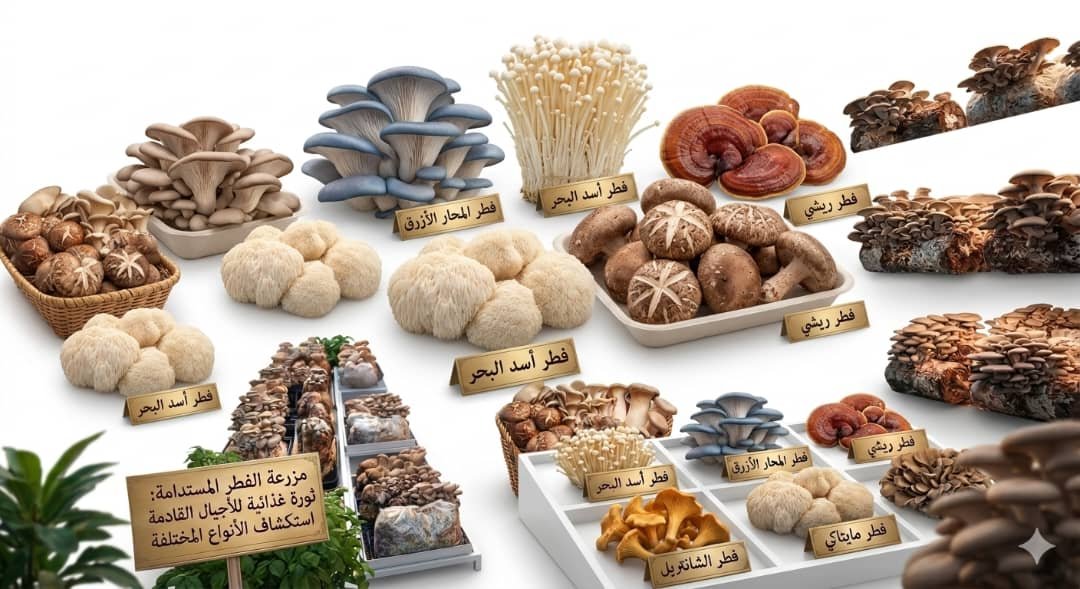
- White Button Mushroom (Agaricus bisporus): The most widely consumed mushroom globally. It is known for its mild flavor and ease of large-scale commercial production, making it the first line of defense for providing everyday meat alternatives at affordable prices for everyone.
- Oyster Mushroom (Pleurotus ostreatus): One of the easiest species to grow and among the most flexible in growing on various types of waste. It is distinguished by its high iron and zinc content and strong ability to adapt to diverse local environments.
- Shiitake Mushroom (Lentinula edodes): Contains “lentinan” compounds with properties proven to support cancer patients and strengthen immune response, alongside a very rich umami flavor.
- Medicinal Mushrooms (Lion’s Mane and Reishi):
- Lion’s Mane: Current studies point to its ability to stimulate nerve growth factor (NGF), helping support brain function, improve memory, and prevent cognitive decline for generations that will face increasing mental strain.
- Reishi (Ganoderma lucidum): Its use in medicinal nutrition focuses on reducing physical and psychological stress and balancing hormones.
Chapter Six: The Nutritional, Preventive, and Therapeutic Value of Mushrooms
First: Mushrooms as Prevention (The Body’s First Line of Defense)
Mushrooms contain unique bioactive compounds that act as protective shields for the body before illness occurs:
- Fighting cancer: Contains “beta-glucan” and “lentinan” compounds that activate natural killer (NK) cells in the immune system, helping the body detect and destroy early cancer cells.
- Protecting arteries and heart: Mushrooms are completely cholesterol-free, and thanks to their soluble fiber content and natural “lovastatin,” they prevent fat buildup in the arteries and protect against blood clots.
- Delaying cellular aging: Rich in the rare antioxidant ergothioneine, which protects DNA from damage caused by free radicals and guards against premature aging diseases.
- Diabetes prevention: Has a very low glycemic index, and its fibers help regulate blood sugar absorption, protecting the pancreas from stress.
Second: Mushrooms as Treatment (Nature’s Smart Pharmacy)
Compounds extracted from certain mushroom species are already used in modern therapeutic protocols:
- Supporting cancer patients (adjunct therapy): Shiitake and Reishi mushrooms are used worldwide as complementary treatment for cancer patients to reduce the severe side effects of chemotherapy and radiation therapy and regenerate white blood cells.
- Treating cognitive and neurological disorders: Lion’s Mane mushroom is distinguished by its ability to stimulate nerve growth factor (NGF) production. It is used therapeutically to help repair nerve cells, improve memory, and combat the onset of Alzheimer’s disease and depression.
- Regulating liver and kidney function: Cordyceps mushroom is known for its ability to improve oxygen flow in body cells, and is used in alternative medicine to treat chronic fatigue, improve stressed kidney function, and detoxify the liver.
- Natural anti-inflammatory and antimicrobial: Some fungi contain natural antibiotics that prevent the growth of harmful bacteria and viruses in the body without affecting beneficial bacteria.
Third: Mushrooms as an Ideal Food (Daily Balance)
Mushrooms link prevention and treatment by providing a balanced internal environment for the body:
- Feeding the microbiome (gut health): Mushrooms act as an excellent “prebiotic,” feeding beneficial bacteria in the gut, which is now known as the “second brain” responsible for 70% of human immunity and mood.
- Zero fat and safe weight loss: Provides a long-lasting feeling of fullness due to its dense fiber content, making it the best dietary remedy for combating excessive obesity and weight gain.
Chapter Seven: Practical, Direct Tips for Safely and Efficiently Incorporating Active (Nutritional and Medicinal) Mushrooms into Our Daily Diet for Maximum Nutrient Absorption
1. Never eat mushrooms raw Reason: Mushroom cell walls contain tough “chitin” that is hard on the stomach, and raw mushrooms may contain natural toxins that disappear with heat. Tip: Always cook mushrooms (boiling, grilling, or sautéing) to break down chitin and release the proteins and minerals hidden inside.
2. Boost their vitamin D content for free Reason: Mushrooms are living organisms affected by sunlight just like human skin, and they synthesize vitamin D. Tip: Place fresh mushrooms (such as white button or portobello) in the sun for 15 to 30 minutes before cooking—this multiplies their vitamin D content hundreds of times.
3. Incorporate medicinal mushrooms into your morning routine Reason: Medicinal mushrooms (like Lion’s Mane and Reishi) are hard and not eaten as vegetables, but taken as powders or supplements. Tip: Add a teaspoon of Lion’s Mane mushroom powder to your morning coffee or tea to boost focus and mental alertness without worrying about its taste.
4. Apply the “Blending” Strategy Reason: To reduce red meat and fat consumption without sacrificing flavor. Tip: When preparing burgers, meatballs, or sauces, finely chop white or shiitake mushrooms and replace 50% of the ground meat quantity with them. You’ll get the same texture and a richer umami flavor with fewer calories.
5. Use mushroom powder as a salt and processed-flavoring substitute Reason: Mushrooms are rich in natural glutamic acid, which enhances food flavor without the need for chemical flavor enhancers. Tip: Dry and grind shiitake mushrooms, and use this powder as a magical natural seasoning for soups and dishes to reduce the need for table salt.
6. Pay attention to timing and dosage
- Energy mushrooms (Lion’s Mane and Cordyceps): Take them in the morning or before exercise, as they boost oxygen and energy in the body.
- Relaxation mushrooms (Reishi): Take in the evening (as tea or supplement), as it calms the nervous system and helps with deep sleep and stress relief.
Chapter Eight: Strategic Challenges and How to Overcome Them
Despite their enormous potential, the mushroom revolution faces some obstacles that must be resolved to ensure its full adoption:
- Cultural and dietary awareness: Some societies still view mushrooms as a side or recreational vegetable rather than a primary protein source. This requires awareness campaigns and educational curricula focusing on their vital importance.
- Biosafety standards: Closed-environment cultivation requires strict sterilization conditions to prevent mold or harmful bacteria growth in the growing substrates. The solution lies in integrating technology and automation into growing rooms.
- Innovative food processing: To engage younger generations, there must be expansion in 3D food printing technologies and development of mycelium-derived products that mimic burgers, sausages, and plant-based cheeses with high quality and palatable taste.
Conclusion
Mushrooms are not merely a passing dietary option, but a strategic necessity and cornerstone in building a resilient and sustainable global food system. Through their unique ability to transform waste into complete, nutrient-dense proteins with the smallest possible environmental footprint, mushrooms represent the true food revolution that will secure future generations’ right to healthy, safe food compatible with the planet’s wellbeing. Investing today in fungal technology and cultivation development is a direct investment in humanity’s future.
Dr. Abdulrazzaq Hashem Al-Oujaili


 English
  العربية