
Dr. Abdulrazzaq Hashem Al-Oujaili
1. Introduction and Physiological Foundations of Building a Lean Body
Sports nutrition holds a leading position in the system of physical performance and body recomposition. The modern concept of physique building is no longer limited to traditional muscular bulk accompanied by increased fat percentages; rather, the focus has shifted toward building a Lean and Vibrant Physique. This concept combines a low Body Fat Percentage, increased Lean Muscle Mass, while maintaining superior energy and vitality levels for performing daily and athletic activities with absolute efficiency. Throughout this comprehensive study, we will discuss in depth the physiological and biochemical foundations linking food to physical effort, and review evidence-based practical strategies for achieving this ideal balance.
The Biochemistry of Energy Production
The body relies on converting chemical energy derived from food into mechanical energy through the primary energy molecule, adenosine triphosphate (ATP). During exercise, the body has three main systems for resynthesizing ATP:
- The Phosphagen System (ATP-PC System): Relies on creatine phosphate stored in the muscles to produce immediate, very short-duration energy (less than 10 seconds), as in an explosive weightlifting rep or a sprint.
- The Anaerobic Glycolytic System: Relies on breaking down glucose and muscle glycogen without the need for oxygen to produce energy for high-intensity activities lasting from 30 seconds to two minutes.
- The Aerobic Oxidative System: Relies on oxygen to burn carbohydrates and fats, and is the primary system for sustained, prolonged activities that support vitality and cardiorespiratory fitness.
To achieve leanness and vitality, these systems must be efficiently activated through intelligent nutrition that ensures the appropriate fuel is available for each system without excess being stored as triglycerides (fat) in adipose tissue.
2. Macronutrients and Smart Energy Calculations
The key to building a lean, vibrant body lies in the precise distribution of macronutrients (proteins, carbohydrates, fats) in proportion to the amount of physical effort exerted.
First: Protein (The Cornerstone of Lean Muscle Building)
Protein is the building chain composed of amino acids, responsible for repairing torn muscle fibers during resistance training through the process of muscle protein synthesis.
- Daily requirement for leanness: Recent sports studies indicate that an athlete seeking to build a lean body and reduce fat needs between 1.6 and 2.2 grams of protein per kilogram of body weight. In cases of severe caloric deficit (cutting), this ratio may rise to 2.4 g/kg to prevent breakdown of valuable muscle mass.
- Biological quality: Focus should be placed on complete proteins high in the amino acid leucine, the primary trigger for the mTOR pathway responsible for muscle growth. Excellent sources include: chicken breast, fish, egg whites, lean red meat, and whey protein (MPS – Muscle Protein Synthesis).
Second: Carbohydrates (Fuel for Vitality and Intense Activity)
Carbohydrates are not the enemy; they are the number one friend of vitality and high athletic performance. Carbohydrates are stored in the body as glycogen in the muscles and liver.
- Quality and timing: To build a lean body, one should rely on complex carbohydrates (low glycemic index, extended-release) such as oats, quinoa, sweet potatoes, and brown rice. These sources ensure a continuous flow of energy and keep insulin levels within a stable range, preventing fat storage and providing lasting vitality.
- Suggested amount: Ranges between 3 to 5 grams per kilogram of body weight, adjusted up or down based on daily training intensity (carb cycling strategy).
Third: Healthy Fats (The Primary Hormonal Regulator)
Fats play a vital role in producing anabolic hormones such as testosterone and growth hormone, and are essential for absorbing fat-soluble vitamins (A, D, E, K) that support overall health and vitality.
- Smart sources: Trans fats and harmful saturated fats should be avoided, with focus on monounsaturated and polyunsaturated fatty acids (omega-3 and omega-9). Sources include: avocado, extra virgin olive oil, raw nuts (almonds and walnuts), and chia seeds.
- Ideal ratio: Fat should not fall below 20% to 25% of total daily calories to ensure the body’s hormonal efficiency does not deteriorate.
Suggested Macronutrient Distribution for the Goal of Leanness and Vitality
Presented in direct, concise points:
- Protein (30%–35% of calories): At a rate of 1.6 to 2.2 grams per kilogram of body weight. Its primary function is repairing muscle fibers, increasing metabolic rate, and preserving lean muscle mass during fat loss.
- Carbohydrates (45%–50% of calories): At a rate of 3.0 to 5.0 grams per kilogram of body weight. Its primary function is replenishing glycogen stores in the muscles and liver, and providing immediate and sustained energy and vitality for athletic performance.
- Healthy fats (20%–25% of calories): At a rate of 0.5 to 1.0 grams per kilogram of body weight. Its primary function is supporting the hormonal system (such as testosterone), protecting joints from injury, and maintaining brain health and activity.
3. Energy Balance and the Body Recomposition Strategy
Building a lean, vibrant body requires a deep understanding of the energy balance equation. To reduce fat and build muscle simultaneously, we do not resort to harsh starvation that destroys vitality and causes thyroid sluggishness; instead, we follow a calculated Slight Caloric Deficit approach or intelligent caloric maintenance.
Calculating Target Calories
Basal Metabolic Rate (BMR) is calculated using scientific equations such as the Mifflin-St Jeor equation, and the result is then multiplied by the Activity Factor.
To achieve leanness and vitality:
- We subtract only 10% to 15% from maintenance calories (a slight deficit ranging between 300 to 500 calories).
- This slight deficit forces the body to burn stored fat as a supplementary energy source.
- High protein intake combined with intense resistance training ensures protection and growth of muscle mass, thereby achieving the goal of leanness without losing vitality and activity.
4. Carb Cycling Strategy and Nutrient Timing
Nutrient timing and the carb cycling strategy are advanced tools in sports nutrition for controlling insulin levels and maximizing nutrient utilization.
Carb Cycling Strategy
This method relies on linking the amount of carbohydrates consumed to the level of training effort exerted during the week:
- High Carb Days: Applied on days involving large, demanding muscle group workouts (such as legs or back). Carbohydrates are increased to fully fill glycogen stores, providing explosive energy and superior vitality for training, and stimulating muscle-building signals.
- Low Carb Days: Applied on days with light exercise, cardio, or rest. Carbohydrates are reduced while healthy fats are increased proportionally. This reduction keeps insulin levels low, making it easier for the body to access fat stores and burn them as a primary fuel.
Nutrient Timing Around the Workout (The Peri-Workout Window)
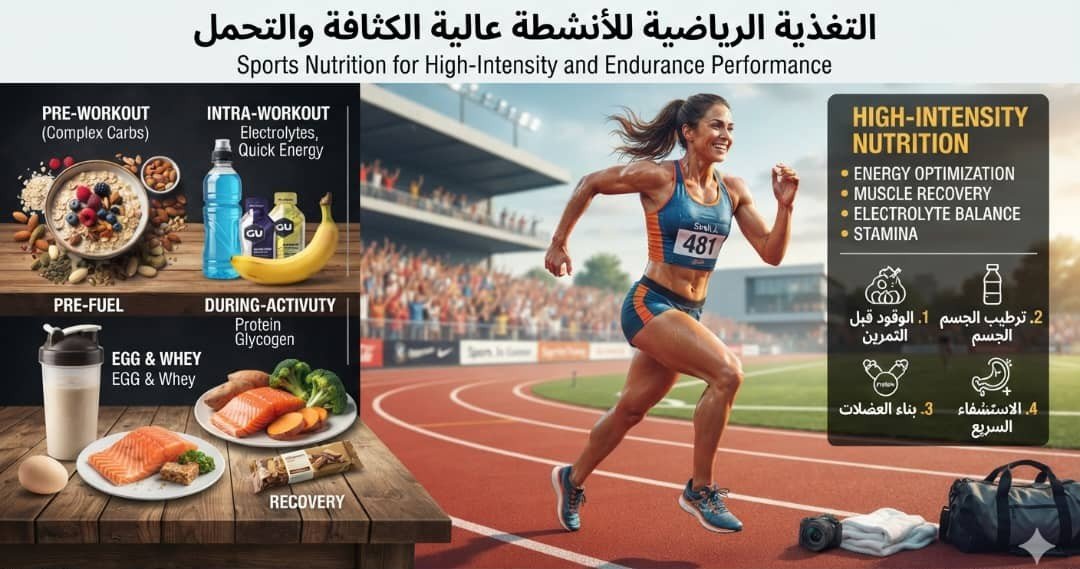
- Pre-workout meal (2 to 3 hours before): Should contain complex carbohydrates and slow-digesting proteins to ensure a continuous flow of amino acids and glucose in the blood during exercise (example: chicken breast with brown rice and salad).
- Immediate fueling meal (30–45 minutes before workout): Easily digestible, rapidly absorbed carbohydrates to raise immediate energy levels (example: a banana or dates with a scoop of whey protein).
- Post-workout meal (muscle recovery window): Within 45 to 90 minutes of exercise, muscle cells are highly sensitive to insulin (Insulin Sensitivity). Consuming rapidly absorbed carbohydrates with quickly digestible protein ensures nutrients are delivered directly into the stressed muscles to rapidly rebuild damaged fibers and replenish lost glycogen, preventing post-workout sluggishness and maintaining vitality.
5. Hydration, Mineral Balance, and Their Role in Vitality and Reducing Stress
Water is the essential component of lean muscle mass (water makes up about 75% of muscle tissue). Any drop in the body’s hydration levels immediately and negatively affects physical strength, mental focus, and overall vitality.
The Physiology of Dehydration and Physical Performance
Losing just 2% of body weight in water due to sweating leads to:
- A decline in athletic performance and physical strength of up to 10% to 20%.
- Increased cardiovascular strain due to reduced blood plasma volume, which raises heart rate and makes exercise feel more difficult and exhausting.
- Slower recovery processes and accumulation of lactic acid in the muscles, causing persistent muscle pain and cramps.
The Ideal Hydration Strategy
- Basic daily amount: An athlete needs to drink at least 3.5 to 4.5 liters of water daily.
- Consumption rate during exercise: It is recommended to drink 200 to 300 ml of water every 15–20 minutes during physical activity.
- Replenishing salts and minerals (electrolytes): With heavy sweating, the body loses essential minerals such as sodium, potassium, and magnesium. To maintain neuromuscular conduction and prevent cramps, it’s best to incorporate salts into workout water, or consume a balanced sports drink containing carbohydrates and salts for activities exceeding 60 minutes.
6. Evidence-Based Dietary Supplements to Enhance Leanness and Activity
At the top of the sports nutrition pyramid come dietary supplements, offering supplementary support and accelerating results — provided they are based on proven scientific foundations and reliable clinical trials.
- Creatine Monohydrate Mechanism of action: Increases creatine phosphate stores in the muscles, speeding up ATP resynthesis. Benefits for leanness and vitality: Enhances explosive strength, increases muscle cell volume via intracellular water retention (giving muscles a fuller, leaner appearance), and improves mental performance and cognitive function. Dosage: 3 to 5 grams daily, taken consistently at any time.
- Whey Protein Isolate Mechanism of action: A protein extracted from milk, exceptionally fast to absorb and digest, containing a complete profile of essential amino acids (EAAs). Benefits: An ideal post-workout choice for rapidly boosting muscle protein synthesis rates; it is also nearly entirely free of fat and carbohydrates (in isolate form), making it a fundamental pillar for lean physiques.
- Caffeine Anhydrous Mechanism of action: Acts as a central nervous system stimulant by blocking adenosine receptors in the brain responsible for feelings of fatigue and sluggishness. Benefits: Raises vitality and sharp focus levels before exercise, increases lipolysis and the use of free fatty acids as fuel during exercise, accelerating fat burning. Dosage: 3–6 mg per kg of body weight, 45 minutes before exercise.
- Omega-3 and Beta-Alanine Beta-alanine: Acts as a buffer and regulator of muscle acidity by raising carnosine levels, delaying the burning sensation and fatigue during high-intensity exercise, and supporting sustained vitality. Omega-3: Reduces inflammation resulting from strenuous exercise and improves insulin sensitivity, enhancing nutrient delivery toward muscle cells rather than fat cells.
7. Designing a Practical Nutrition Program (A Full-Day Sample Model)
To apply the previous theoretical concepts, we present a practical, balanced nutritional model designed for an athlete weighing 80 kg, seeking to build a lean, vitality-filled body, who trains with resistance exercises in the evening.
Meal 1: Breakfast (Hormonal and Health Energy Loading) Ingredients: 3 whole eggs cooked in extra virgin olive oil + 60 grams of oats cooked with unsweetened almond milk and a dash of cinnamon + a small handful of blueberries (antioxidants). Physiological goal: Providing high-quality protein along with essential fatty acids to support morning hormone production, alongside complex carbohydrates that ensure stable blood sugar and steady energy levels for several hours.
Meal 2: Lunch (Nutrient Balance and Muscle Building) Ingredients: 200 grams of grilled chicken breast + 150 grams of cooked brown rice + a large mixed green salad (cucumber, lettuce, spinach, broccoli) with a teaspoon of olive oil and lemon juice. Physiological goal: Supplying the body with a concentrated dose of amino acids to maintain a positive nitrogen balance in the muscles, along with micronutrients (vitamins and minerals) that support vital processes and metabolism.
Meal 3: Pre-Workout Meal (Two Hours Before) Ingredients: 150 grams of baked sweet potato + 100 grams of light canned tuna in water. Physiological goal: Filling muscle glycogen stores with clean, slow-absorbing fuel to prevent sudden energy crashes during intense training.
Nutrition During Exercise (Maintaining Performance) Ingredients: One liter of water mixed with 5 grams of creatine and a quarter teaspoon of high-quality sea salt (sodium).
Meal 4: Post-Workout and Immediate Recovery Meal Ingredients: 1 scoop of whey protein isolate + a large ripe banana (eaten immediately after the workout) → followed an hour later by a full meal consisting of: 200 grams of grilled salmon + 150 grams of boiled quinoa + grilled asparagus. Physiological goal: Taking advantage of the muscle recovery window by delivering fast protein to repair fibers and fast carbohydrates to raise insulin and drive nutrients into the muscles, followed by an omega-3-rich meal to reduce muscle inflammation and speed up recovery so the body is ready with full vitality for the next day.
8. Top Ten Foods for Athletes
The top ten foods that give athletes high energy, build lean muscle, and ensure sustained leanness and vitality:
- Chicken breast: The number one source of pure, fat-free protein for building and repairing muscle fibers.
- Oats: Complex carbohydrates providing extended, stable energy throughout the workout.
- Whole eggs: Combine high-quality protein with healthy fats that stimulate anabolic hormones.
- Salmon: Rich in protein and omega-3s, which reduce joint inflammation and speed up muscle recovery.
- Sweet potatoes: An ideal fuel for replenishing glycogen stores, easy to digest before demanding workouts.
- Bananas: A quick energy source rich in potassium to prevent muscle cramps during physical exertion.
- Avocado: Provides the body with monounsaturated fats that ensure sustained energy for endurance sports.
- Spinach: Rich in iron and nitrates that improve oxygen flow and blood circulation to the muscles.
- Raw almonds: An ideal snack providing vitamin E and antioxidants to protect cells.
- Quinoa: A complete plant-based protein containing fiber and minerals to intelligently replenish the body’s energy.
9. Conclusion and Sustainable Scientific Recommendations
Building a lean, vibrant body is not merely a temporary phase that ends upon reaching a certain weight; it is a comprehensive lifestyle grounded in science and intelligent application. Sports nutrition directed toward leanness does not mean deprivation in any form; rather, it means precisely managing and directing dietary intake to serve physical performance and daily vitality.
Final recommendations for achieving sustainability and maximum results:
- Commitment to consistency: Impressive results in body recomposition require time and continuous application. Adhering to the nutrition plan at 85% to 90% throughout the year is far better than 100% adherence for a few weeks followed by collapse and stopping.
- Listening to the body (biofeedback): Athletes should monitor their body’s vital indicators such as: sleep quality, morning energy levels, training strength, and muscle recovery rate. If an athlete notices a sharp drop in vitality or an increase in fatigue, this is a clear signal that calorie intake needs to be reviewed, or that carbohydrate intake and rest need to be increased.
- Sleep and rest (the unsung hero): Sports nutrition cannot function efficiently without 7 to 8 hours of deep sleep at night. Sleep is the actual time during which the highest levels of growth hormone are secreted, and during which muscle recovery and fat burning occur with maximum efficiency.
By integrating precise macronutrient calculations, choosing foods of high biological value, optimal hydration, and evidence-based supplements, any athlete can successfully reshape their body to reach peak leanness while fully preserving vitality, activity, and high energy throughout their life.
Study Summary
This comprehensive study was designed to demonstrate that the scientific integration of precise sports nutrition, intelligent nutrient timing, and strict hydration is the sole and safest path to building sculpted, lean bodies without sacrificing athletes’ vitality and peak energy levels.
Dr. Abdulrazzaq Al-Oujaili


 English
  العربية